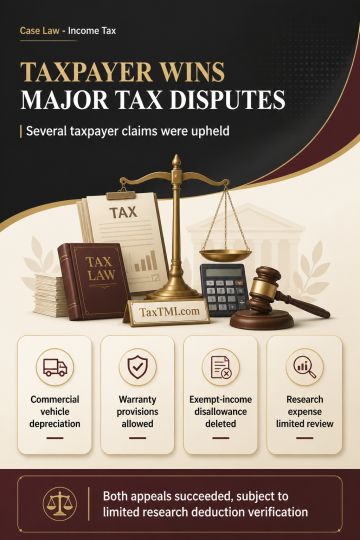
Commercial vehicle depreciation, scientifically determined warranty provisions and exempt-income disallowances were resolved in favour of the taxpayer...
Inherited property sale proceeds require capital-gains treatment where ownership is supported by evidence, not suspicion or unverified signature doubt...
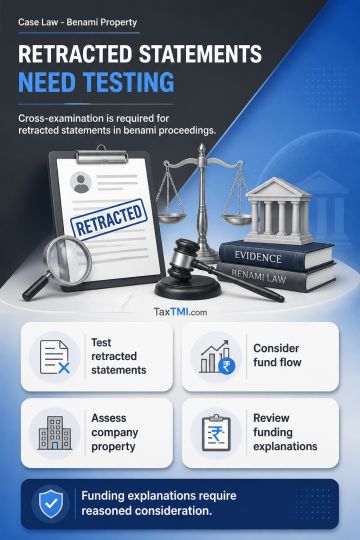
Cross-examination of retracted statements is essential where foundational evidence supports a benami allegation and documented funding explanations re...
The HC held that under Section 26E of the SARFAESI Act, the secured creditor possesses priority over the secured asset concerning recovery of dues. Since the secured creditor had not taken possession of the property, the CGST authorities were justified in attaching the asset. Despite the admitted outstanding dues owed to both the CGST authorities and the secured creditor, the court allowed the secured creditor to proceed with enforcement against the secured asset. The ruling clarified that the CGST authorities' right to recover dues is subordinate to the secured creditor's interests, who must maintain transparent accounting and share transaction details with the CGST authorities. The court referred to established precedent confirming that statutory dues under other enactments, such as the MSMED Act, do not confer similar priority rights. The petition was accordingly disposed of.
The HC held that under Section 26E of the SARFAESI Act, the secured creditor possesses priority over the secured asset concerning recovery of dues. Since the secured creditor had not taken possession of the property, the CGST authorities were justified in attaching the asset. Despite the admitted outstanding dues owed to both the CGST authorities and the secured creditor, the court allowed the secured creditor to proceed with enforcement against the secured asset. The ruling clarified that the CGST authorities' right to recover dues is subordinate to the secured creditor's interests, who must maintain transparent accounting and share transaction details with the CGST authorities. The court referred to established precedent confirming that statutory dues under other enactments, such as the MSMED Act, do not confer similar priority rights. The petition was accordingly disposed of.
Note: It is a system-generated summary and is for quick reference only.
 TaxTMI
 of 4803















 Join Channel


 TaxTMI