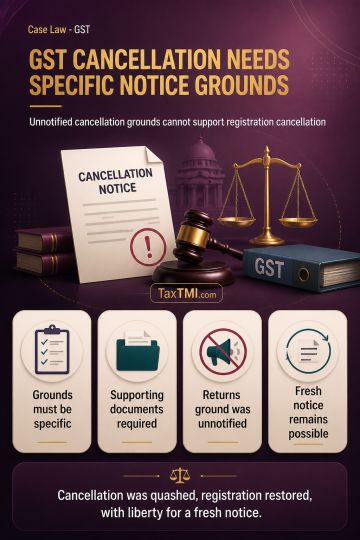
Clean slate principle extinguishes uncrystallised operational claims and bars continuation of pending recovery and arbitral proceedings after plan app...
Works contract classification governs composite layout-development contracts where VAT-paid goods are transferred alongside construction and infrastru...
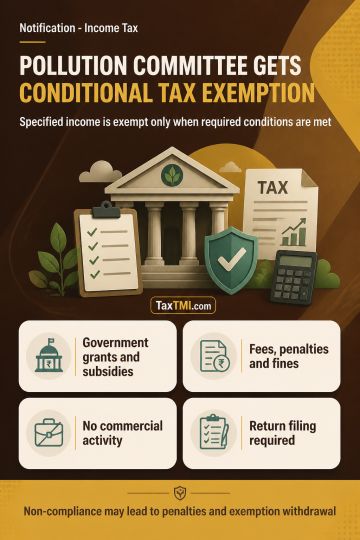
Specified income tax exemption for pollution control body remains conditional on non-commercial activity, unchanged income character, and return filin...
Jurisdictional facts in certificate-of-origin discrepancies can support customs show-cause proceedings, leaving factual explanations for departmental ...
The ITAT held that the intimation under section 143(1) issued on 30.03.2019 was invalid as it was passed before the expiry of the mandatory 30-day period provided to the assessee for submitting a response, which ended on 22.04.2019. The purported response date of 23.03.2019 was found to be incorrect and inconsistent with the record. Consequently, the Tribunal ruled that the intimation was bad in law for non-compliance with the statutory procedural requirement. As a result, the disallowance made by the AO pursuant to the impugned intimation was deleted. The appeal filed by the assessee was allowed.
The ITAT held that the intimation under section 143(1) issued on 30.03.2019 was invalid as it was passed before the expiry of the mandatory 30-day period provided to the assessee for submitting a response, which ended on 22.04.2019. The purported response date of 23.03.2019 was found to be incorrect and inconsistent with the record. Consequently, the Tribunal ruled that the intimation was bad in law for non-compliance with the statutory procedural requirement. As a result, the disallowance made by the AO pursuant to the impugned intimation was deleted. The appeal filed by the assessee was allowed.
Note: It is a system-generated summary and is for quick reference only.
 TaxTMI
 of 4796















 Join Channel


 TaxTMI