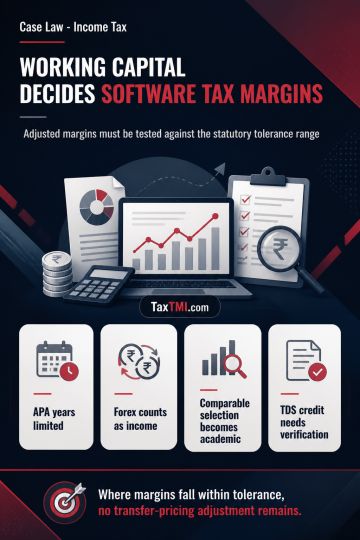
Working-capital adjustment determines whether software-services transfer-pricing margins fall within the statutory tolerance range, eliminating any ad...
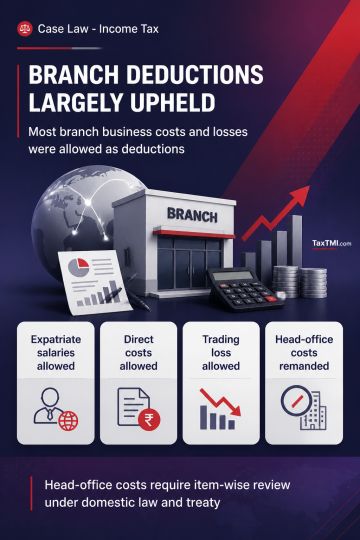
Permanent establishment deductions upheld for expatriate salaries, direct costs and trading losses, while head-office costs require fresh classificati...
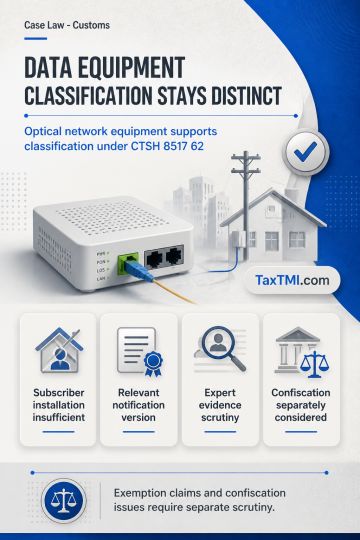
Data transmission equipment classification under CTSH 8517 62 remains distinct from residual classification, with exemption evidence requiring scrutin...
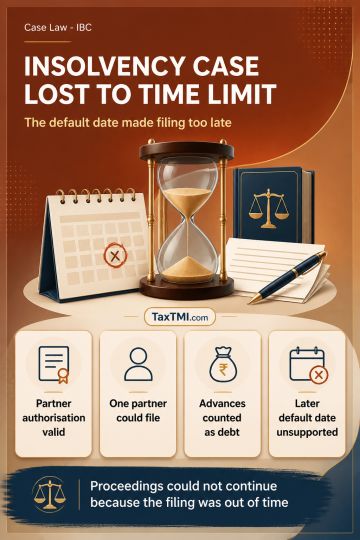
The Appellate Tribunal held that the limitation period for filing the appeal commenced on the date the impugned order was pronounced, with a 30-day limitation period and an additional 15-day extension under Section 14 of the Limitation Act, 1963. The appellant's delay of 117 days far exceeded the permissible period, and the Tribunal found the appellant's conduct reckless and lacking bona fides or due diligence. Consequently, the appellant was not entitled to the benefit of condonation under Section 14. Furthermore, relying on binding precedent, the Tribunal reaffirmed its lack of jurisdiction to condone delay beyond 15 days. Accordingly, the appeal was dismissed for being barred by limitation.
The Appellate Tribunal held that the limitation period for filing the appeal commenced on the date the impugned order was pronounced, with a 30-day limitation period and an additional 15-day extension under Section 14 of the Limitation Act, 1963. The appellant's delay of 117 days far exceeded the permissible period, and the Tribunal found the appellant's conduct reckless and lacking bona fides or due diligence. Consequently, the appellant was not entitled to the benefit of condonation under Section 14. Furthermore, relying on binding precedent, the Tribunal reaffirmed its lack of jurisdiction to condone delay beyond 15 days. Accordingly, the appeal was dismissed for being barred by limitation.
Note: It is a system-generated summary and is for quick reference only.
 TaxTMI
 of 4800







 Join Channel


 TaxTMI