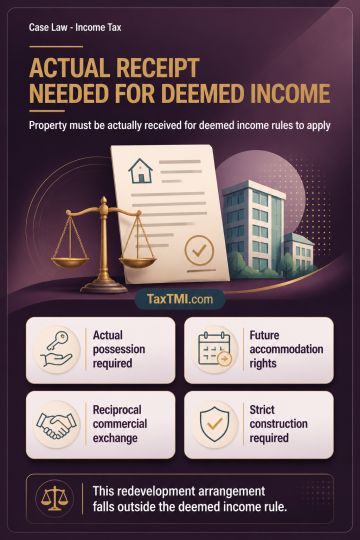
Receipt of immovable property requires actual possession or enjoyment; redevelopment allotments exchanged for tenancy rights fall outside deemed incom...
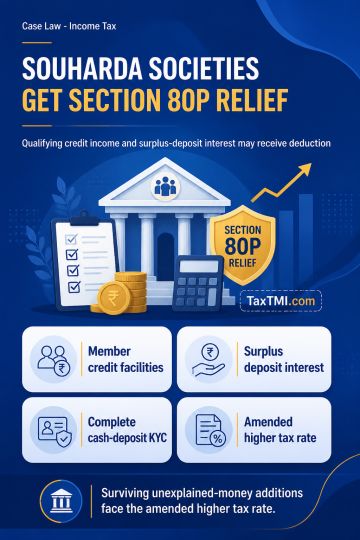
Section 80P deduction covers Souharda credit societies, including qualifying surplus-deposit interest, subject to member KYC verification for cash dep...
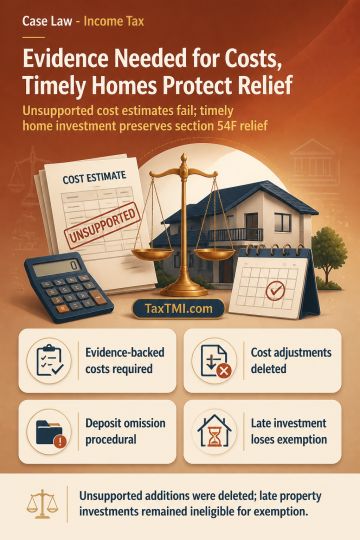
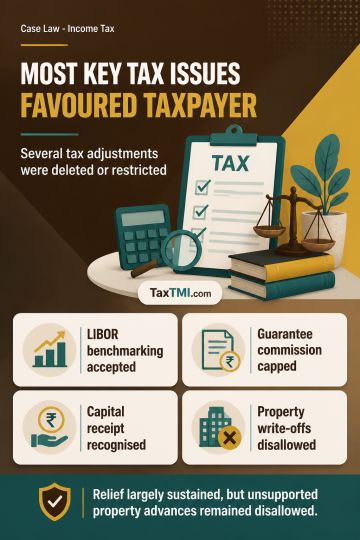
Transfer-pricing benchmarking and capital-receipt principles sustained taxpayer relief, while unsupported property-advance write-offs remained disallo...
The Appellate Tribunal held that the limitation period for filing the appeal commenced on the date the impugned order was pronounced, with a 30-day limitation period and an additional 15-day extension under Section 14 of the Limitation Act, 1963. The appellant's delay of 117 days far exceeded the permissible period, and the Tribunal found the appellant's conduct reckless and lacking bona fides or due diligence. Consequently, the appellant was not entitled to the benefit of condonation under Section 14. Furthermore, relying on binding precedent, the Tribunal reaffirmed its lack of jurisdiction to condone delay beyond 15 days. Accordingly, the appeal was dismissed for being barred by limitation.
The Appellate Tribunal held that the limitation period for filing the appeal commenced on the date the impugned order was pronounced, with a 30-day limitation period and an additional 15-day extension under Section 14 of the Limitation Act, 1963. The appellant's delay of 117 days far exceeded the permissible period, and the Tribunal found the appellant's conduct reckless and lacking bona fides or due diligence. Consequently, the appellant was not entitled to the benefit of condonation under Section 14. Furthermore, relying on binding precedent, the Tribunal reaffirmed its lack of jurisdiction to condone delay beyond 15 days. Accordingly, the appeal was dismissed for being barred by limitation.
Note: It is a system-generated summary and is for quick reference only.
 TaxTMI
 of 4798








 Join Channel


 TaxTMI