Defined public benefit can retain charitable character; registration renewal requires examining genuine activities and legal compliance, not surplus a...
Capital reduction is distinct from share buy-back, preventing buy-back tax; restructuring interest and related business deductions also survive scruti...
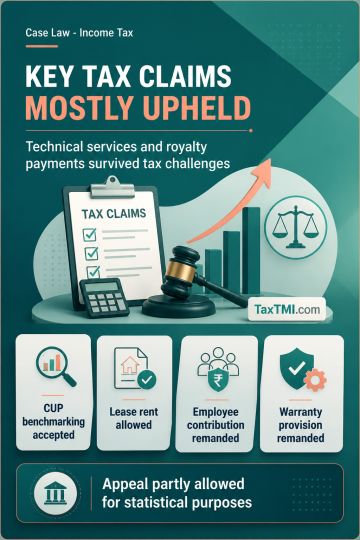
Transfer pricing and tax deductions upheld on established principles, while employee contributions and warranty provisions returned for fresh examinat...
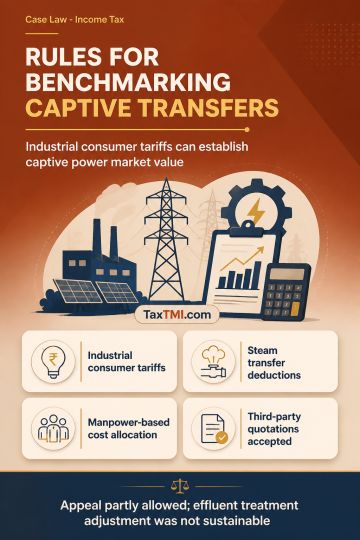
Captive transfer pricing relies on industrial consumer tariffs, while genuine quotations can benchmark effluent treatment transfers under the Other Me...
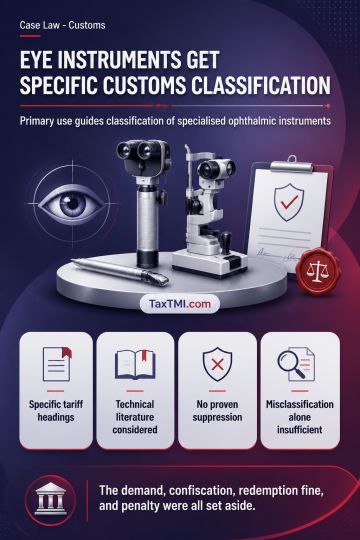
Specific tariff classification for ophthalmic instruments and extended limitation principles determine the treatment of duty demands, confiscation, an...
Integrated golf function determines classification, placing launch monitors and simulators under other golf equipment rather than measuring instrument...
The CESTAT allowed the appeal, holding that where an assessee clears goods both to sister units and independent third-party buyers, the assessable value for related party transfers must be the transaction value, not costing plus profit margin under Rule 8 of the Central Excise Valuation Rules, 2000. The tribunal found the appellant's clearances to unrelated parties substantiated, negating the applicability of cost-based valuation. Additionally, the confirmed demand arising from a debit note lacked corroborative evidence of receipt and was set aside. The demand was also barred by limitation, as the department failed to prove suppression despite timely statutory returns reflecting declared values. Consequently, all confirmed demands, including those based on time limitation grounds, were quashed, affirming the appellant's valuation methodology and negating the department's claims.
The CESTAT allowed the appeal, holding that where an assessee clears goods both to sister units and independent third-party buyers, the assessable value for related party transfers must be the transaction value, not costing plus profit margin under Rule 8 of the Central Excise Valuation Rules, 2000. The tribunal found the appellant's clearances to unrelated parties substantiated, negating the applicability of cost-based valuation. Additionally, the confirmed demand arising from a debit note lacked corroborative evidence of receipt and was set aside. The demand was also barred by limitation, as the department failed to prove suppression despite timely statutory returns reflecting declared values. Consequently, all confirmed demands, including those based on time limitation grounds, were quashed, affirming the appellant's valuation methodology and negating the department's claims.
Note: It is a system-generated summary and is for quick reference only.
 TaxTMI
 of 4794















 Join Channel


 TaxTMI
