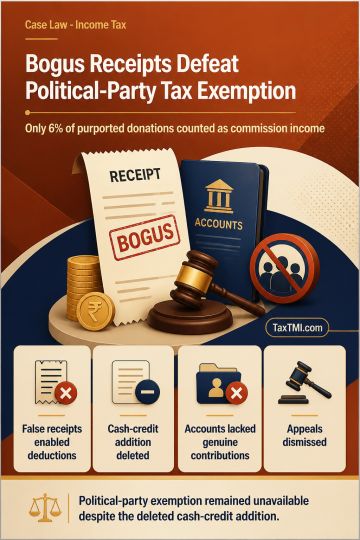
Bogus donation receipts justified commission income assessment and defeated political-party tax exemption for inaccurate accounts and reporting failur...
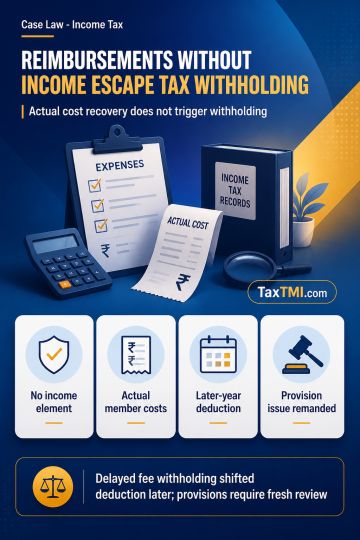
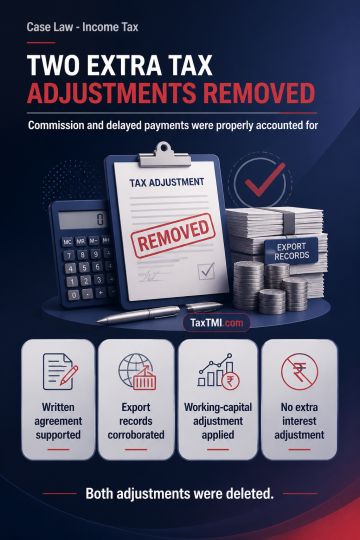
Pure reimbursement without income element escapes tax withholding, while delayed withholding and unsupported provisions face deferred or renewed scrut...
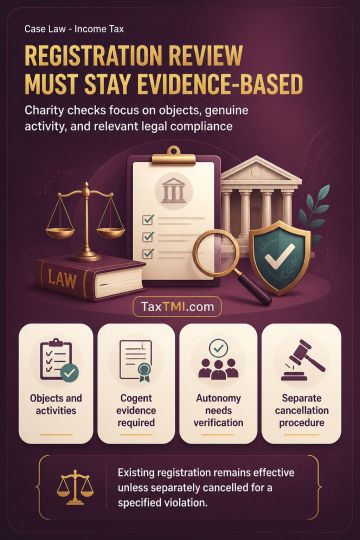
Public benefit requirement defeats charitable registration where residents' association services are reciprocal, member-only facilities governed by mu...
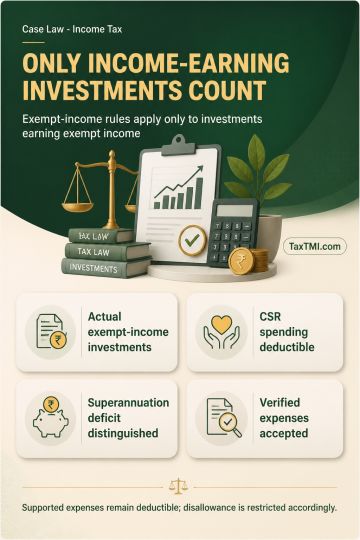
Exempt-income expenditure disallowance is confined to investments that actually generated exempt income, while supported business expenses remain dedu...
Objective characteristics and principal use govern mining-tyre classification, while fresh advance ruling applications may rely on additional technica...
Page of 4788
Press 'Enter' after typing page number.
461 to 480 of 95752 Results
❮
❯
❯❯
0 / 200
Expand Note
Add to Folder
No Folders have been created
+
Are you sure you want to delete "My most important" ?
The CESTAT allowed the appeal, holding that where an assessee clears goods both to sister units and independent third-party buyers, the assessable value for related party transfers must be the transaction value, not costing plus profit margin under Rule 8 of the Central Excise Valuation Rules, 2000. The tribunal found the appellant's clearances to unrelated parties substantiated, negating the applicability of cost-based valuation. Additionally, the confirmed demand arising from a debit note lacked corroborative evidence of receipt and was set aside. The demand was also barred by limitation, as the department failed to prove suppression despite timely statutory returns reflecting declared values. Consequently, all confirmed demands, including those based on time limitation grounds, were quashed, affirming the appellant's valuation methodology and negating the department's claims.
The CESTAT allowed the appeal, holding that where an assessee clears goods both to sister units and independent third-party buyers, the assessable value for related party transfers must be the transaction value, not costing plus profit margin under Rule 8 of the Central Excise Valuation Rules, 2000. The tribunal found the appellant's clearances to unrelated parties substantiated, negating the applicability of cost-based valuation. Additionally, the confirmed demand arising from a debit note lacked corroborative evidence of receipt and was set aside. The demand was also barred by limitation, as the department failed to prove suppression despite timely statutory returns reflecting declared values. Consequently, all confirmed demands, including those based on time limitation grounds, were quashed, affirming the appellant's valuation methodology and negating the department's claims.
Note: It is a system-generated summary and is for quick reference only.
 TaxTMI
 of 4788




 Join Channel


 TaxTMI