Transfer pricing and tax deductions upheld on established principles, while employee contributions and warranty provisions returned for fresh examinat...
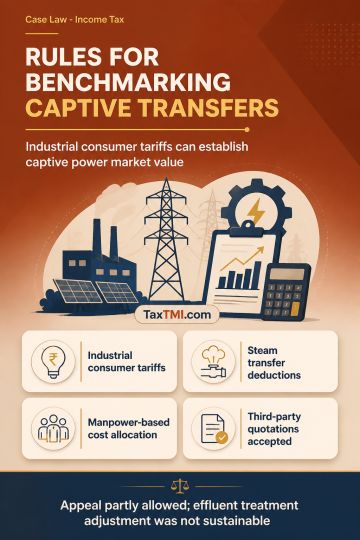
Captive transfer pricing relies on industrial consumer tariffs, while genuine quotations can benchmark effluent treatment transfers under the Other Me...
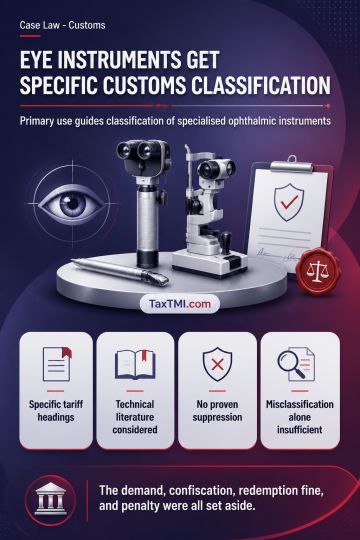
Specific tariff classification for ophthalmic instruments and extended limitation principles determine the treatment of duty demands, confiscation, an...
Integrated golf function determines classification, placing launch monitors and simulators under other golf equipment rather than measuring instrument...
Public servant status under anti-corruption law extends to recognised stock exchange leadership; constitutional and sanction challenges do not succeed...
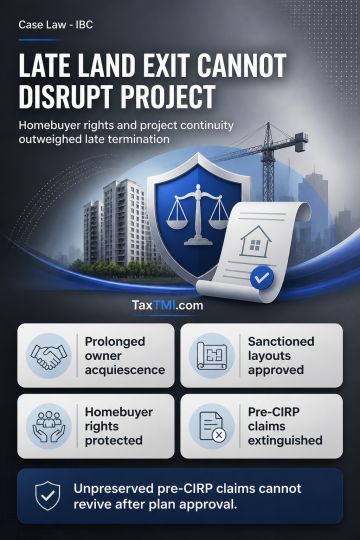
Acquiescence, homebuyer protection and clean-slate resolution principles prevent landowners from disrupting an integrated project through late termina...
The HC held that under Rule 90(3) of the CGST Rules, deficiency communication via Form GST RFD-03 is mandatory, and the period of deficiency communication is excluded from the two-year limitation under Section 54(1). In the case at hand, the Department claimed issuance of an SCN and rejection without reply, but the petitioner contended non-receipt or non-uploading of the SCN and rejection order, resulting in denial of the right to be heard. Since the final rejection order dated 2019 was only disclosed to the petitioner in 2025, the court allowed the petitioner to file an appeal before the Appellate Authority under Section 107. The Department's inability to produce the deficiency memo (Form GST RFD-03) undermined its justification to withhold the refund. The petition was accordingly disposed of, preserving the petitioner's right to challenge the refund rejection.
The HC held that under Rule 90(3) of the CGST Rules, deficiency communication via Form GST RFD-03 is mandatory, and the period of deficiency communication is excluded from the two-year limitation under Section 54(1). In the case at hand, the Department claimed issuance of an SCN and rejection without reply, but the petitioner contended non-receipt or non-uploading of the SCN and rejection order, resulting in denial of the right to be heard. Since the final rejection order dated 2019 was only disclosed to the petitioner in 2025, the court allowed the petitioner to file an appeal before the Appellate Authority under Section 107. The Department's inability to produce the deficiency memo (Form GST RFD-03) undermined its justification to withhold the refund. The petition was accordingly disposed of, preserving the petitioner's right to challenge the refund rejection.
Note: It is a system-generated summary and is for quick reference only.
 TaxTMI
 of 4805












 Join Channel


 TaxTMI