Transaction value cannot be rejected solely on non-statutory valuation guidelines without corroborative evidence supporting reassessment of final cust...
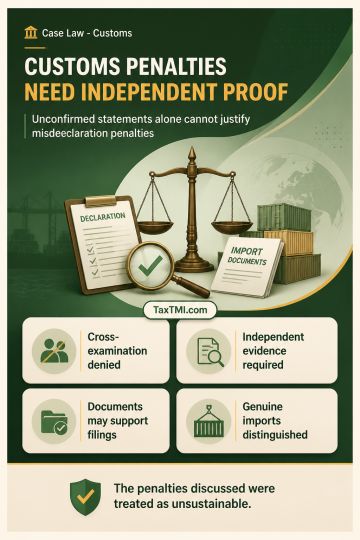
Cross-examination rights and corroborated evidence limit customs penalties for misdeclaration in genuine import transactions involving documented clea...
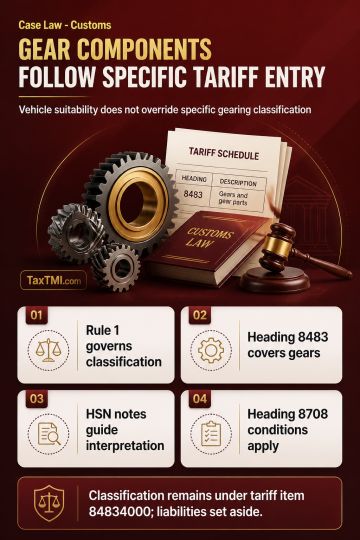
Tariff classification of vehicle gear components follows the specific gearing entry, displacing motor-vehicle parts classification and related liabili...
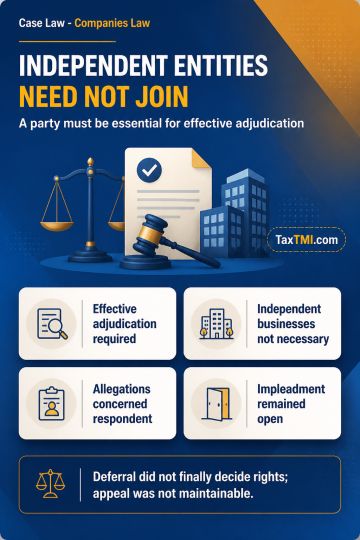
Necessary-party requirements limit impleadment of independent entities, while deferred consideration does not create an appealable adverse determinati...
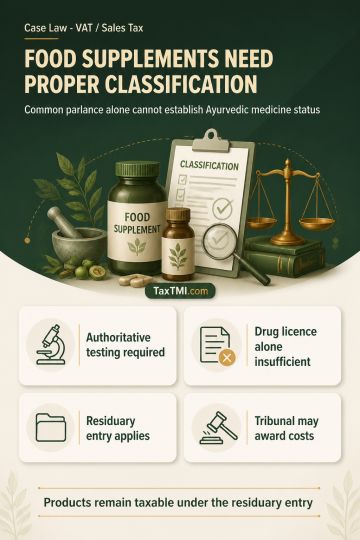
Food supplement classification requires common parlance and authoritative tests, preventing treatment as proprietary Ayurvedic medicines without suppo...
The HC held that under Rule 90(3) of the CGST Rules, deficiency communication via Form GST RFD-03 is mandatory, and the period of deficiency communication is excluded from the two-year limitation under Section 54(1). In the case at hand, the Department claimed issuance of an SCN and rejection without reply, but the petitioner contended non-receipt or non-uploading of the SCN and rejection order, resulting in denial of the right to be heard. Since the final rejection order dated 2019 was only disclosed to the petitioner in 2025, the court allowed the petitioner to file an appeal before the Appellate Authority under Section 107. The Department's inability to produce the deficiency memo (Form GST RFD-03) undermined its justification to withhold the refund. The petition was accordingly disposed of, preserving the petitioner's right to challenge the refund rejection.
The HC held that under Rule 90(3) of the CGST Rules, deficiency communication via Form GST RFD-03 is mandatory, and the period of deficiency communication is excluded from the two-year limitation under Section 54(1). In the case at hand, the Department claimed issuance of an SCN and rejection without reply, but the petitioner contended non-receipt or non-uploading of the SCN and rejection order, resulting in denial of the right to be heard. Since the final rejection order dated 2019 was only disclosed to the petitioner in 2025, the court allowed the petitioner to file an appeal before the Appellate Authority under Section 107. The Department's inability to produce the deficiency memo (Form GST RFD-03) undermined its justification to withhold the refund. The petition was accordingly disposed of, preserving the petitioner's right to challenge the refund rejection.
Note: It is a system-generated summary and is for quick reference only.
 TaxTMI
 of 4800







 Join Channel


 TaxTMI
