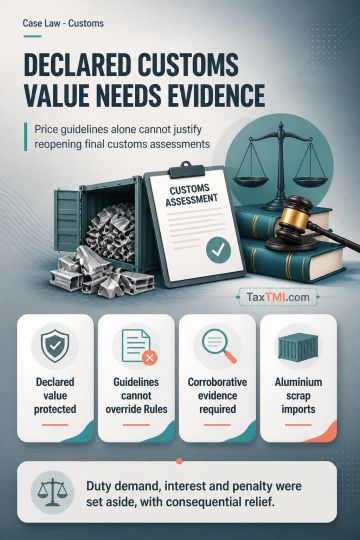
Transaction value cannot be rejected solely on non-statutory valuation guidelines without corroborative evidence supporting reassessment of final cust...
Cross-examination rights and corroborated evidence limit customs penalties for misdeclaration in genuine import transactions involving documented clea...
Tariff classification of vehicle gear components follows the specific gearing entry, displacing motor-vehicle parts classification and related liabili...
Necessary-party requirements limit impleadment of independent entities, while deferred consideration does not create an appealable adverse determinati...
Food supplement classification requires common parlance and authoritative tests, preventing treatment as proprietary Ayurvedic medicines without suppo...
The HC held that notifications issued under Section 168A CGST Act, purportedly extending limitation periods, must be strictly construed as exceptions to Section 73. The impugned notifications lacked a valid recommendation from the GST Council based on relevant material, rendering them unsustainable. While the GST Council's recommendation is mandatory, it is not binding on the government; however, post-issuance ratification by the Council does not cure the defect of absence of prior recommendation. The Court distinguished between extension of limitation (Section 168A) and computation of limitation (Supreme Court's orders under Article 142), holding that the notifications erroneously diminished limitation periods contrary to the Supreme Court's orders, thus violating legislative intent. Consequently, the notifications were quashed, and all matters were remanded to assessing authorities for fresh adjudication consistent with these findings.
The HC held that notifications issued under Section 168A CGST Act, purportedly extending limitation periods, must be strictly construed as exceptions to Section 73. The impugned notifications lacked a valid recommendation from the GST Council based on relevant material, rendering them unsustainable. While the GST Council's recommendation is mandatory, it is not binding on the government; however, post-issuance ratification by the Council does not cure the defect of absence of prior recommendation. The Court distinguished between extension of limitation (Section 168A) and computation of limitation (Supreme Court's orders under Article 142), holding that the notifications erroneously diminished limitation periods contrary to the Supreme Court's orders, thus violating legislative intent. Consequently, the notifications were quashed, and all matters were remanded to assessing authorities for fresh adjudication consistent with these findings.
Note: It is a system-generated summary and is for quick reference only.
 TaxTMI
 of 4801





















 Join Channel


 TaxTMI
