Transaction value cannot be rejected solely on non-statutory valuation guidelines without corroborative evidence supporting reassessment of final cust...
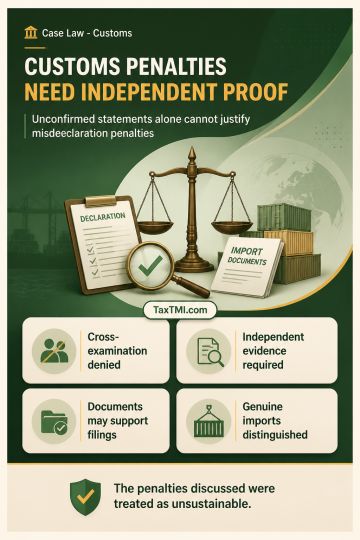
Cross-examination rights and corroborated evidence limit customs penalties for misdeclaration in genuine import transactions involving documented clea...
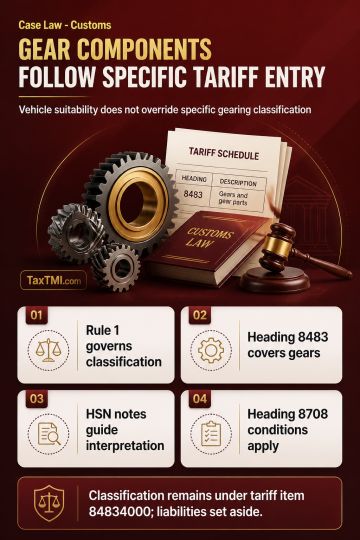
Tariff classification of vehicle gear components follows the specific gearing entry, displacing motor-vehicle parts classification and related liabili...
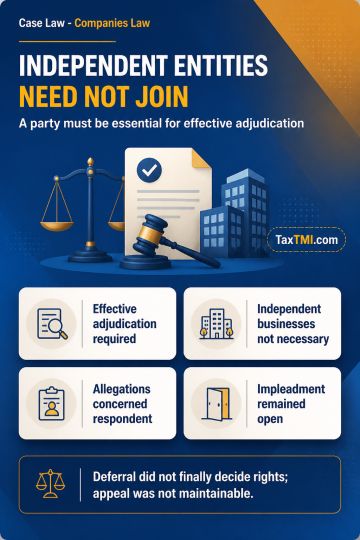
Necessary-party requirements limit impleadment of independent entities, while deferred consideration does not create an appealable adverse determinati...
Food supplement classification requires common parlance and authoritative tests, preventing treatment as proprietary Ayurvedic medicines without suppo...
The ITAT held that the penalty under section 271(1)(c) was unsustainable as the Assessing Officer failed to record satisfaction specifically whether the assessee concealed particulars of income or furnished inaccurate particulars, a mandatory precondition for initiating penalty proceedings. The AO issued the notice under section 274 read with section 271(1)(c) in a standard proforma without deleting irrelevant portions, indicating non-application of mind. Consequently, the penalty notice was invalid for lack of clarity and specificity, denying the assessee adequate opportunity to respond. The tribunal quashed the penalty order, allowing the appeal, reaffirming that proper satisfaction and clear specification of charge are essential prerequisites before imposing penalty under section 271(1)(c).
The ITAT held that the penalty under section 271(1)(c) was unsustainable as the Assessing Officer failed to record satisfaction specifically whether the assessee concealed particulars of income or furnished inaccurate particulars, a mandatory precondition for initiating penalty proceedings. The AO issued the notice under section 274 read with section 271(1)(c) in a standard proforma without deleting irrelevant portions, indicating non-application of mind. Consequently, the penalty notice was invalid for lack of clarity and specificity, denying the assessee adequate opportunity to respond. The tribunal quashed the penalty order, allowing the appeal, reaffirming that proper satisfaction and clear specification of charge are essential prerequisites before imposing penalty under section 271(1)(c).
Note: It is a system-generated summary and is for quick reference only.
 TaxTMI
 of 4801














 Join Channel


 TaxTMI
