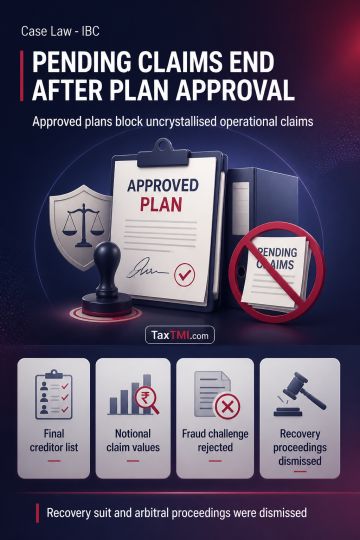
Clean slate principle extinguishes uncrystallised operational claims and bars continuation of pending recovery and arbitral proceedings after plan app...
Works contract classification governs composite layout-development contracts where VAT-paid goods are transferred alongside construction and infrastru...
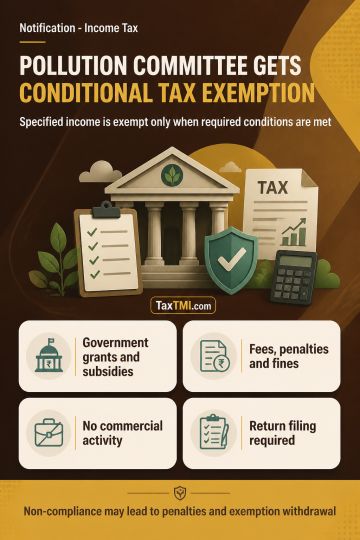
Specified income tax exemption for pollution control body remains conditional on non-commercial activity, unchanged income character, and return filin...
Jurisdictional facts in certificate-of-origin discrepancies can support customs show-cause proceedings, leaving factual explanations for departmental ...
The ITAT held that the penalty imposed under sections 271D and 271E was invalid as the penalty order was passed beyond the limitation period prescribed under section 275(1)(c). The statute mandates that penalty proceedings must be completed either by the later of two periods: March 31 following the financial year in which the assessment proceedings concluded, or within six months from the end of the month in which the penalty proceedings were initiated. Since the penalty order was passed on January 31, 2024, exceeding the prescribed deadline of June 30, 2023, it was held time-barred. Reliance on precedent confirmed that penalties imposed after the prescribed limitation period are not sustainable. Consequently, the penalty order was quashed, and the appellant's appeal was allowed.
The ITAT held that the penalty imposed under sections 271D and 271E was invalid as the penalty order was passed beyond the limitation period prescribed under section 275(1)(c). The statute mandates that penalty proceedings must be completed either by the later of two periods: March 31 following the financial year in which the assessment proceedings concluded, or within six months from the end of the month in which the penalty proceedings were initiated. Since the penalty order was passed on January 31, 2024, exceeding the prescribed deadline of June 30, 2023, it was held time-barred. Reliance on precedent confirmed that penalties imposed after the prescribed limitation period are not sustainable. Consequently, the penalty order was quashed, and the appellant's appeal was allowed.
Note: It is a system-generated summary and is for quick reference only.
 TaxTMI
 of 4805











 Join Channel


 TaxTMI