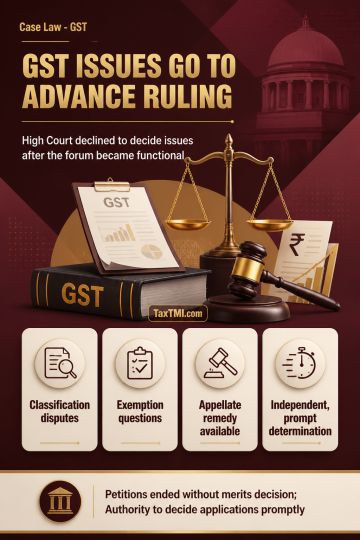
Advance-ruling mechanism governs pending GST classification, exemption and taxability disputes, limiting writ review once the specialised forum functi...
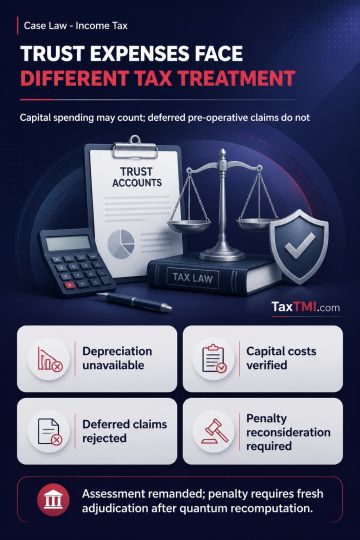
Charitable trust income application permits verified capital expenditure but rejects deferred pre-operative claims and requires reconsideration of con...
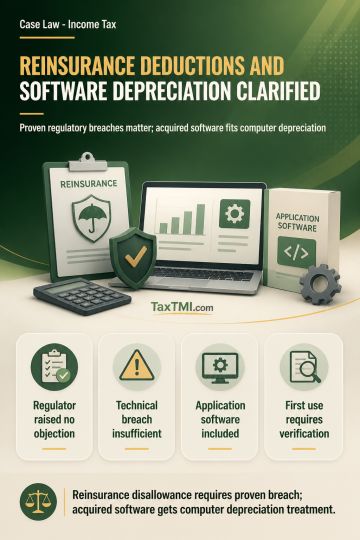
Reinsurance premium deductions require established regulatory breaches, while independently acquired software qualifies within the computer depreciati...
Page of 4796
Press 'Enter' after typing page number.
761 to 780 of 95918 Results
❮
❯
❯❯
0 / 200
Expand Note
Add to Folder
No Folders have been created
+
Are you sure you want to delete "My most important" ?
The ITAT held that the assessee, engaged in reinsurance, does not constitute a permanent establishment (PE) in India under the modified Article 5 of the MLI between India and Ireland. Despite the revenue's contention that the assessee and a related enterprise carried out complementary functions amounting to a cohesive business operation in India, the tribunal found no business activities or presence in India, including no premises or acceptance of risk within India. Consequently, the anti-fragmentation rule under the MLI, designed to prevent abuse of preparatory or auxiliary activity exemptions, was inapplicable. The tribunal concluded that the assessee's income was not taxable in India due to the absence of a PE, ruling in favor of the assessee.
The ITAT held that the assessee, engaged in reinsurance, does not constitute a permanent establishment (PE) in India under the modified Article 5 of the MLI between India and Ireland. Despite the revenue's contention that the assessee and a related enterprise carried out complementary functions amounting to a cohesive business operation in India, the tribunal found no business activities or presence in India, including no premises or acceptance of risk within India. Consequently, the anti-fragmentation rule under the MLI, designed to prevent abuse of preparatory or auxiliary activity exemptions, was inapplicable. The tribunal concluded that the assessee's income was not taxable in India due to the absence of a PE, ruling in favor of the assessee.
Note: It is a system-generated summary and is for quick reference only.
 TaxTMI
 of 4796







 Join Channel


 TaxTMI