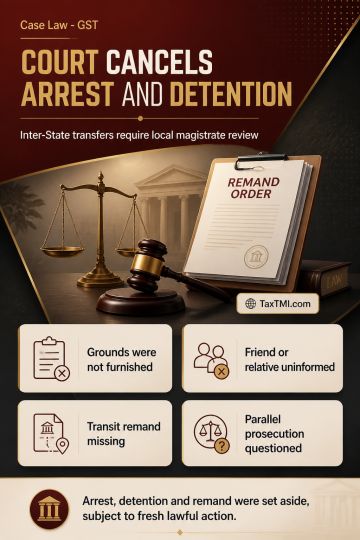
Arrest safeguards and transit remand requirements invalidated detention following inter-State transfer without communicated grounds or magistrate auth...
Arrest safeguards require disclosed grounds, relative intimation and transit remand, while duplicate prosecution under the CGST framework is unsustain...
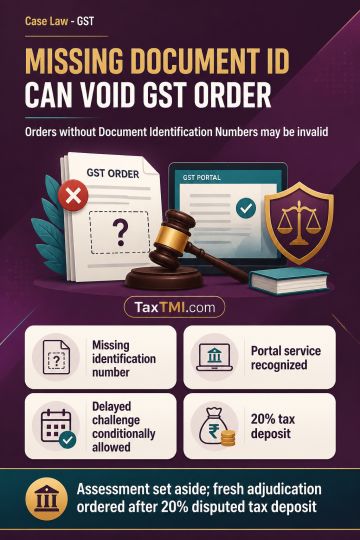
Document Identification Number defects can invalidate GST assessments, with delayed challenges entertained conditionally where patent irregularities e...
Windmill commissioning evidence supported higher depreciation where grid connection and electricity generation proved operational use before the relev...
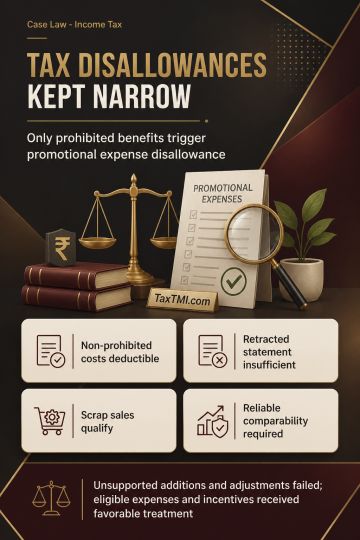
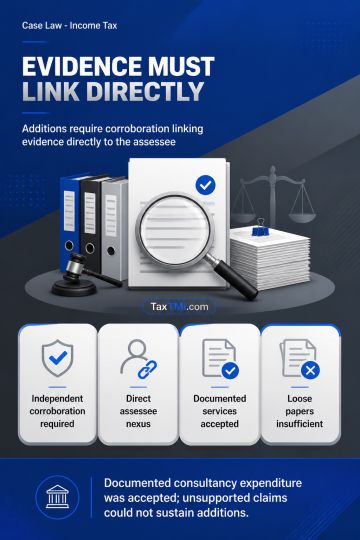
Pharmaceutical promotion and transfer-pricing comparability principles limited disallowances, while uncorroborated search allegations and unsupported ...
Business expenditure substantiation supports scrap credits, statutory payments and expense claims, while depreciation requires proof of actual busines...
The ITAT held that the assessee, engaged in reinsurance, does not constitute a permanent establishment (PE) in India under the modified Article 5 of the MLI between India and Ireland. Despite the revenue's contention that the assessee and a related enterprise carried out complementary functions amounting to a cohesive business operation in India, the tribunal found no business activities or presence in India, including no premises or acceptance of risk within India. Consequently, the anti-fragmentation rule under the MLI, designed to prevent abuse of preparatory or auxiliary activity exemptions, was inapplicable. The tribunal concluded that the assessee's income was not taxable in India due to the absence of a PE, ruling in favor of the assessee.
The ITAT held that the assessee, engaged in reinsurance, does not constitute a permanent establishment (PE) in India under the modified Article 5 of the MLI between India and Ireland. Despite the revenue's contention that the assessee and a related enterprise carried out complementary functions amounting to a cohesive business operation in India, the tribunal found no business activities or presence in India, including no premises or acceptance of risk within India. Consequently, the anti-fragmentation rule under the MLI, designed to prevent abuse of preparatory or auxiliary activity exemptions, was inapplicable. The tribunal concluded that the assessee's income was not taxable in India due to the absence of a PE, ruling in favor of the assessee.
Note: It is a system-generated summary and is for quick reference only.
 TaxTMI
 of 4792














 Join Channel


 TaxTMI