Additional evidence in transfer pricing dispute leads to fresh examination, while tax deductions, TDS credit, fee and refund interest require verifica...
Category II AIF pass-through taxation preserves non-business income character; investment receipts cannot be reclassified without applying recognised ...
Mutual fund maturity rules require proper rollover, redemption, disclosure, and due diligence; investor gains cannot excuse regulatory breaches or pen...
Threshold exemption excludes exempt services, while stamp-paper purchases avoid reverse charge; consequential service tax penalties were also set asid...
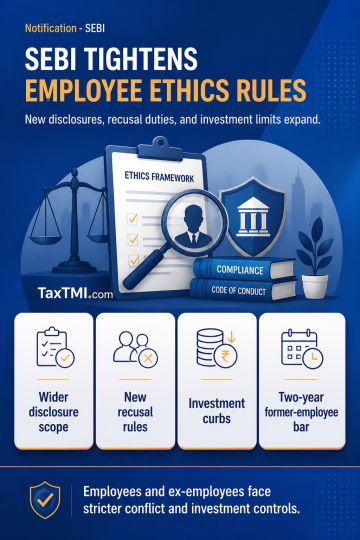
Employee conflict disclosures and investment restrictions expand with new recusal duties, post-employment limits, and compliance reporting requirement...
The HC approved a consent arrangement resolving the dispute concerning alleged fraudulent trading in RTS securities. The petitioner committed to furnishing a fresh pay order of Rs. 25,00,000 by a specified date towards settlement charges and confirmed non-engagement in securities trading since issuance of show cause notices, fulfilling a three-year debarment condition. Consequently, the petitioner was permitted immediate access to capital markets. The respondent agreed to formalize a consent order within two weeks of receiving the pay order, leading to settlement of proceedings initiated under the show cause notices. Prior SEBI orders restraining the petitioner were rendered unenforceable. The consent order explicitly stated it neither exonerated nor implicated the petitioner regarding violations under the SEBI Act or Regulations. Pending litigation involving the petitioner and third parties was preserved for adjudication on merits by the appropriate forum.
The HC approved a consent arrangement resolving the dispute concerning alleged fraudulent trading in RTS securities. The petitioner committed to furnishing a fresh pay order of Rs. 25,00,000 by a specified date towards settlement charges and confirmed non-engagement in securities trading since issuance of show cause notices, fulfilling a three-year debarment condition. Consequently, the petitioner was permitted immediate access to capital markets. The respondent agreed to formalize a consent order within two weeks of receiving the pay order, leading to settlement of proceedings initiated under the show cause notices. Prior SEBI orders restraining the petitioner were rendered unenforceable. The consent order explicitly stated it neither exonerated nor implicated the petitioner regarding violations under the SEBI Act or Regulations. Pending litigation involving the petitioner and third parties was preserved for adjudication on merits by the appropriate forum.
Note: It is a system-generated summary and is for quick reference only.
 TaxTMI
 of 4803



















 Join Channel


 TaxTMI
