Defined public benefit can retain charitable character; registration renewal requires examining genuine activities and legal compliance, not surplus a...
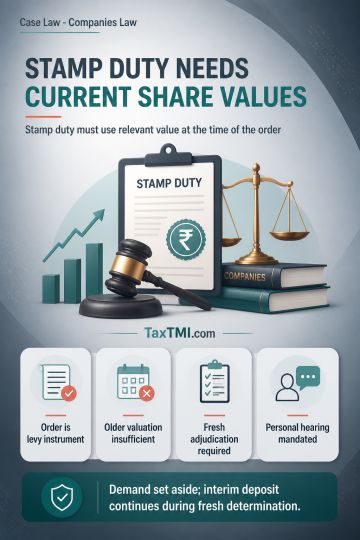
Capital reduction is distinct from share buy-back, preventing buy-back tax; restructuring interest and related business deductions also survive scruti...
Transfer pricing and tax deductions upheld on established principles, while employee contributions and warranty provisions returned for fresh examinat...
Captive transfer pricing relies on industrial consumer tariffs, while genuine quotations can benchmark effluent treatment transfers under the Other Me...
Specific tariff classification for ophthalmic instruments and extended limitation principles determine the treatment of duty demands, confiscation, an...
Integrated golf function determines classification, placing launch monitors and simulators under other golf equipment rather than measuring instrument...
The HC held that the impugned G.O.s issued by the State prohibiting theatre owners from collecting convenience fees on online ticket bookings lacked statutory authority under the ED Act, as Sections 7, 10, and 4(2)(b) do not empower such prohibition. The Court found that these G.O.s violated Article 19(1)(g) as they imposed an unreasonable restriction without legislative backing, being mere executive orders rather than valid laws. Furthermore, the G.O.s could not be upheld under Article 162, as they did not constitute valid State decisions fulfilling constitutional requirements. Consequently, the Court declared clauses prohibiting collection of convenience fees unconstitutional and quashed them, affirming the fundamental right of theatre owners to conduct their business without unlawful restraint. The petition was allowed, restoring the right to collect convenience fees on online ticket bookings.
The HC held that the impugned G.O.s issued by the State prohibiting theatre owners from collecting convenience fees on online ticket bookings lacked statutory authority under the ED Act, as Sections 7, 10, and 4(2)(b) do not empower such prohibition. The Court found that these G.O.s violated Article 19(1)(g) as they imposed an unreasonable restriction without legislative backing, being mere executive orders rather than valid laws. Furthermore, the G.O.s could not be upheld under Article 162, as they did not constitute valid State decisions fulfilling constitutional requirements. Consequently, the Court declared clauses prohibiting collection of convenience fees unconstitutional and quashed them, affirming the fundamental right of theatre owners to conduct their business without unlawful restraint. The petition was allowed, restoring the right to collect convenience fees on online ticket bookings.
Note: It is a system-generated summary and is for quick reference only.
 TaxTMI
 of 4798



















 Join Channel


 TaxTMI
