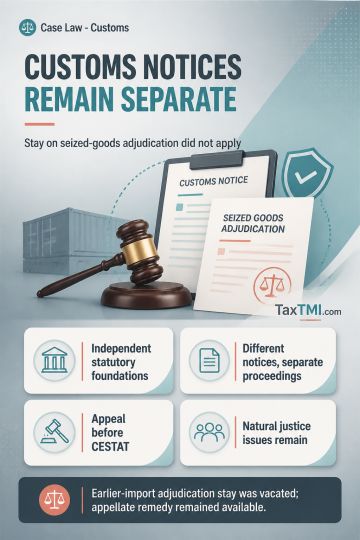
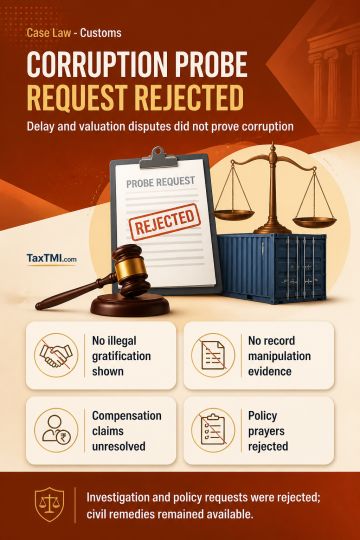
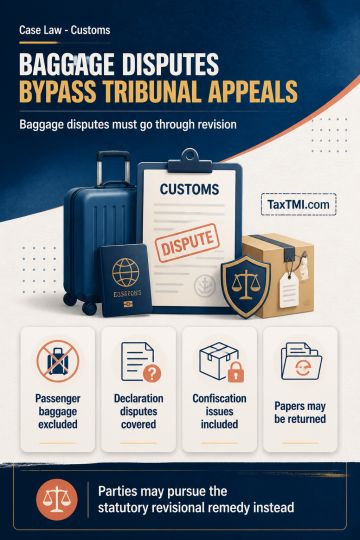
Independent show-cause notices remain separate proceedings, while customs adjudication challenges should ordinarily follow the statutory appellate rem...
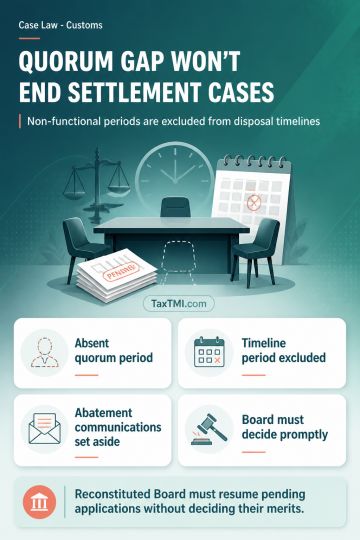
Institutional incapacity in customs settlement proceedings excludes non-functional quorum periods from statutory disposal timelines, preventing automa...
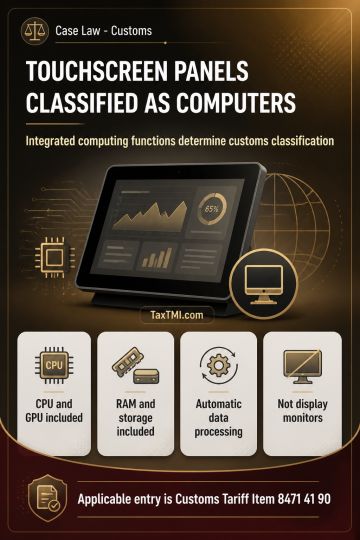
Interactive touchscreen panels with integrated computing functions fall under automatic data-processing machines rather than display monitors for cust...
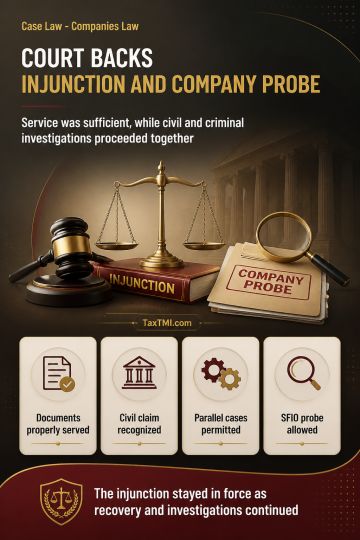
Ex parte injunction service requirements were substantially met, while civil recovery and SFIO investigation into provident fund defalcation continued...
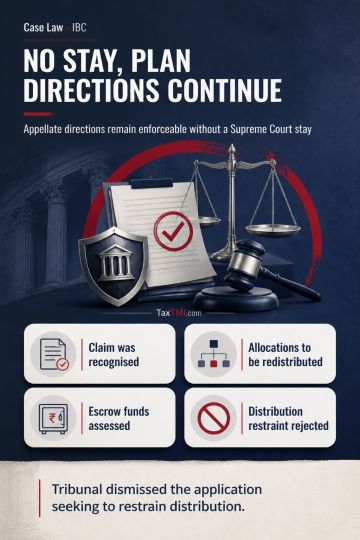
Enforcement of resolution-plan directions continues without a Supreme Court stay, preventing suspension of redistribution and escrowed-fund distributi...
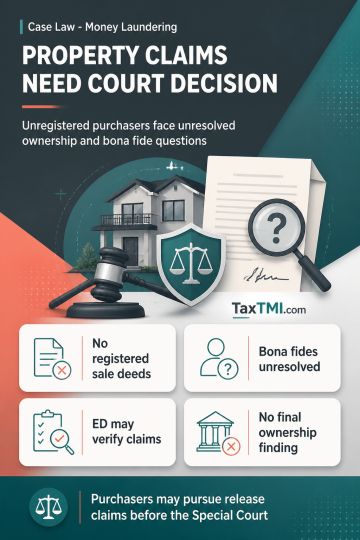
Third-party ownership claims over attached property require Special Court adjudication where purchasers lack registered sale deeds and bona fides rema...
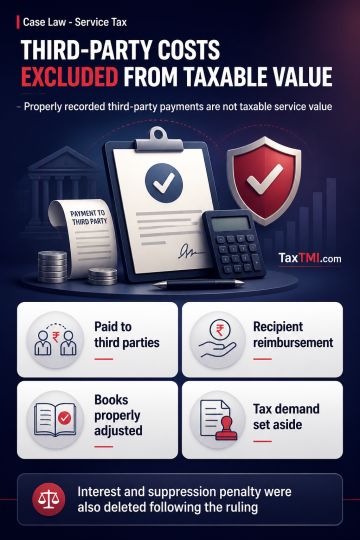
Pure-agent reimbursements in clearing and forwarding services are excluded from taxable value when qualifying third-party payments are properly record...
The HC held that the impugned G.O.s issued by the State prohibiting theatre owners from collecting convenience fees on online ticket bookings lacked statutory authority under the ED Act, as Sections 7, 10, and 4(2)(b) do not empower such prohibition. The Court found that these G.O.s violated Article 19(1)(g) as they imposed an unreasonable restriction without legislative backing, being mere executive orders rather than valid laws. Furthermore, the G.O.s could not be upheld under Article 162, as they did not constitute valid State decisions fulfilling constitutional requirements. Consequently, the Court declared clauses prohibiting collection of convenience fees unconstitutional and quashed them, affirming the fundamental right of theatre owners to conduct their business without unlawful restraint. The petition was allowed, restoring the right to collect convenience fees on online ticket bookings.
The HC held that the impugned G.O.s issued by the State prohibiting theatre owners from collecting convenience fees on online ticket bookings lacked statutory authority under the ED Act, as Sections 7, 10, and 4(2)(b) do not empower such prohibition. The Court found that these G.O.s violated Article 19(1)(g) as they imposed an unreasonable restriction without legislative backing, being mere executive orders rather than valid laws. Furthermore, the G.O.s could not be upheld under Article 162, as they did not constitute valid State decisions fulfilling constitutional requirements. Consequently, the Court declared clauses prohibiting collection of convenience fees unconstitutional and quashed them, affirming the fundamental right of theatre owners to conduct their business without unlawful restraint. The petition was allowed, restoring the right to collect convenience fees on online ticket bookings.
Note: It is a system-generated summary and is for quick reference only.
 TaxTMI
 of 4782



 Join Channel


 TaxTMI
