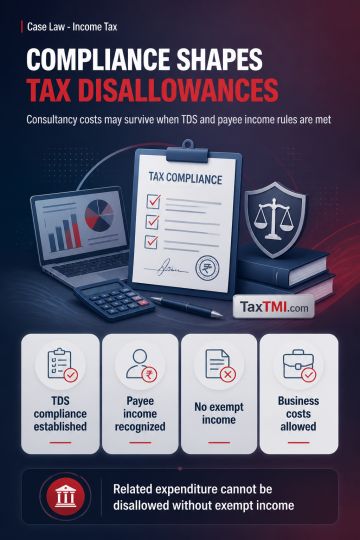
Tax deduction compliance and payee income recognition govern consultancy disallowance, while no exempt income prevents related expenditure disallowanc...
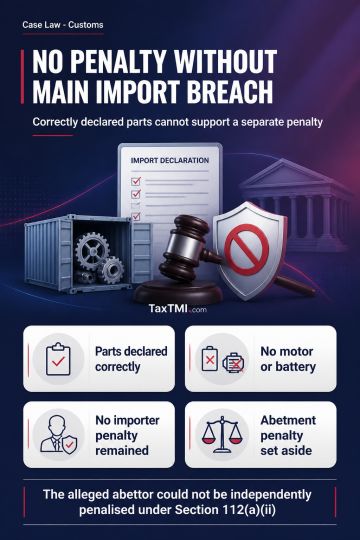
Derivative abetment liability fails when correctly declared imported components establish no underlying improper importation by the principal importer...
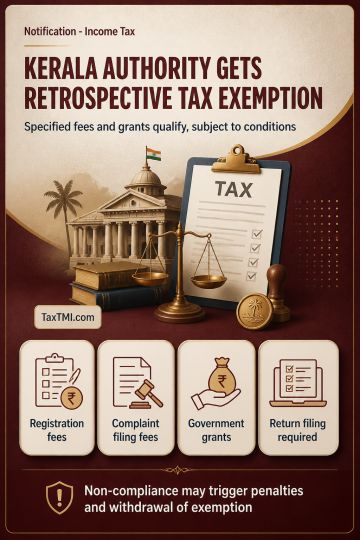
Tax exemption for regulatory authority income applies retrospectively, subject to non-commercial activity, unchanged income sources, and return filing...
Page of 4788
Press 'Enter' after typing page number.
361 to 380 of 95752 Results
❮
❯
❯❯
0 / 200
Expand Note
Add to Folder
No Folders have been created
+
Are you sure you want to delete "My most important" ?
The HC held that the impugned G.O.s issued by the State prohibiting theatre owners from collecting convenience fees on online ticket bookings lacked statutory authority under the ED Act, as Sections 7, 10, and 4(2)(b) do not empower such prohibition. The Court found that these G.O.s violated Article 19(1)(g) as they imposed an unreasonable restriction without legislative backing, being mere executive orders rather than valid laws. Furthermore, the G.O.s could not be upheld under Article 162, as they did not constitute valid State decisions fulfilling constitutional requirements. Consequently, the Court declared clauses prohibiting collection of convenience fees unconstitutional and quashed them, affirming the fundamental right of theatre owners to conduct their business without unlawful restraint. The petition was allowed, restoring the right to collect convenience fees on online ticket bookings.
The HC held that the impugned G.O.s issued by the State prohibiting theatre owners from collecting convenience fees on online ticket bookings lacked statutory authority under the ED Act, as Sections 7, 10, and 4(2)(b) do not empower such prohibition. The Court found that these G.O.s violated Article 19(1)(g) as they imposed an unreasonable restriction without legislative backing, being mere executive orders rather than valid laws. Furthermore, the G.O.s could not be upheld under Article 162, as they did not constitute valid State decisions fulfilling constitutional requirements. Consequently, the Court declared clauses prohibiting collection of convenience fees unconstitutional and quashed them, affirming the fundamental right of theatre owners to conduct their business without unlawful restraint. The petition was allowed, restoring the right to collect convenience fees on online ticket bookings.
Note: It is a system-generated summary and is for quick reference only.
 TaxTMI
 of 4788



 Join Channel


 TaxTMI
