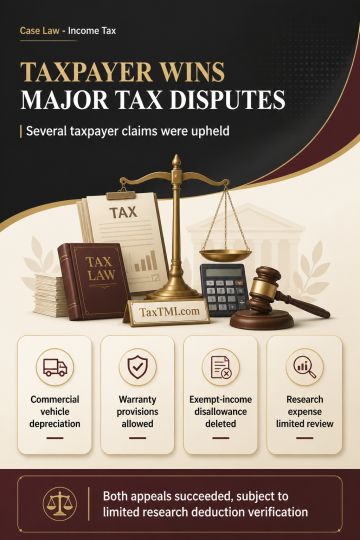
Commercial vehicle depreciation, scientifically determined warranty provisions and exempt-income disallowances were resolved in favour of the taxpayer...
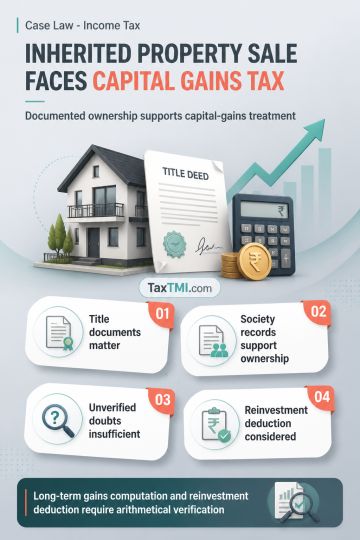
Inherited property sale proceeds require capital-gains treatment where ownership is supported by evidence, not suspicion or unverified signature doubt...
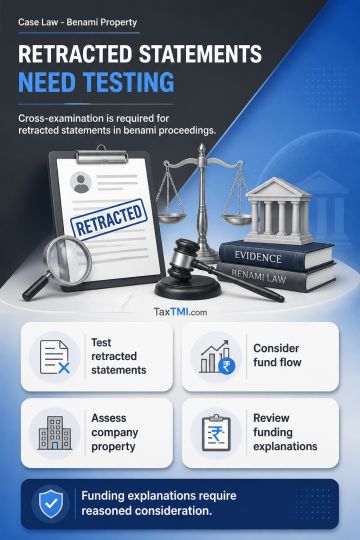
Cross-examination of retracted statements is essential where foundational evidence supports a benami allegation and documented funding explanations re...
Capital-goods exemption covers plant-modernisation accessories, while the import restriction applies only to earlier capital-goods components and spar...
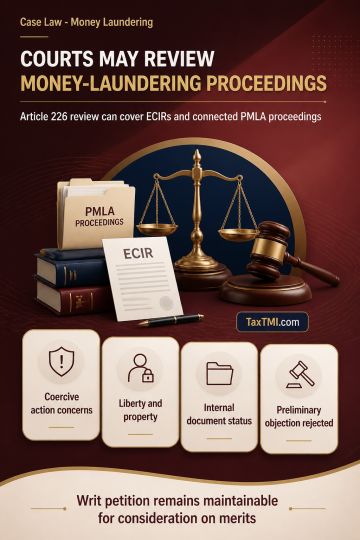
Constitutional judicial review permits challenges to ECIRs and connected money-laundering proceedings where coercive action affects fundamental intere...
The CESTAT held that the appellant's services do not qualify as those rendered by an authorised service station under Section 65(105)(zo) read with Section 69(9) of the Finance Act, 1994; hence, the demand of service tax on that ground is unsustainable. The Tribunal further found the demand under the Reverse Charge Mechanism (RCM) for the period April 2005 to March 2008 to be time-barred, as the show-cause notice was issued beyond the prescribed limitation period. Additionally, since the appellant had discharged the service tax liability under RCM and was entitled to claim CENVAT credit, the penalty and extended period invocation were unjustified. In light of the revenue-neutral position and precedent, the Tribunal set aside the impugned order, quashing the confirmed demand and penalty, thereby allowing the appeal.
The CESTAT held that the appellant's services do not qualify as those rendered by an authorised service station under Section 65(105)(zo) read with Section 69(9) of the Finance Act, 1994; hence, the demand of service tax on that ground is unsustainable. The Tribunal further found the demand under the Reverse Charge Mechanism (RCM) for the period April 2005 to March 2008 to be time-barred, as the show-cause notice was issued beyond the prescribed limitation period. Additionally, since the appellant had discharged the service tax liability under RCM and was entitled to claim CENVAT credit, the penalty and extended period invocation were unjustified. In light of the revenue-neutral position and precedent, the Tribunal set aside the impugned order, quashing the confirmed demand and penalty, thereby allowing the appeal.
Note: It is a system-generated summary and is for quick reference only.
 TaxTMI
 of 4782







 Join Channel


 TaxTMI
