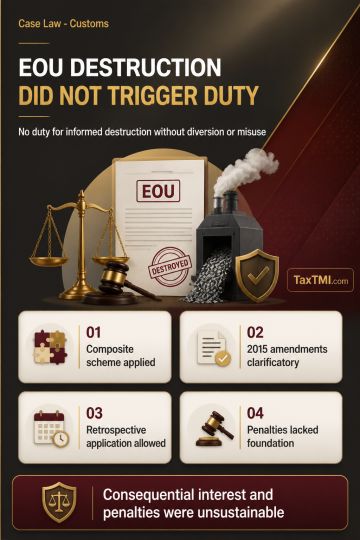
Defined public benefit can retain charitable character; registration renewal requires examining genuine activities and legal compliance, not surplus a...
Capital reduction is distinct from share buy-back, preventing buy-back tax; restructuring interest and related business deductions also survive scruti...
Transfer pricing and tax deductions upheld on established principles, while employee contributions and warranty provisions returned for fresh examinat...
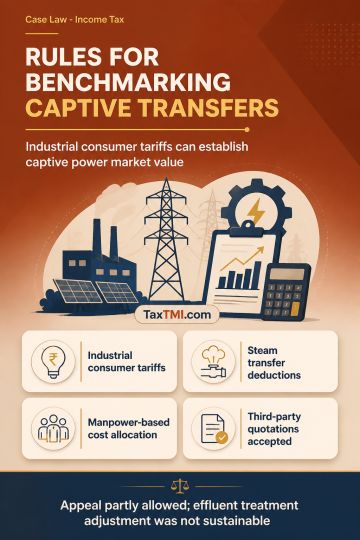
Captive transfer pricing relies on industrial consumer tariffs, while genuine quotations can benchmark effluent treatment transfers under the Other Me...
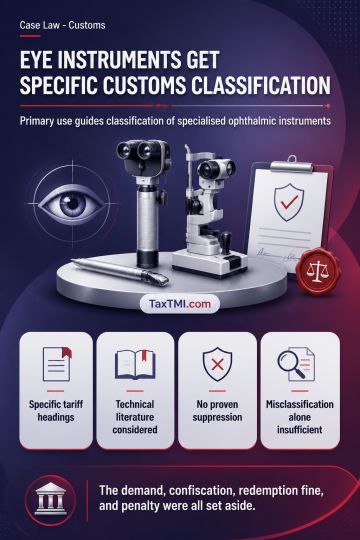
Specific tariff classification for ophthalmic instruments and extended limitation principles determine the treatment of duty demands, confiscation, an...
The HC set aside the impugned order rejecting the petitioner's revised TRAN-1 form under Section 140 of the CGST Act, 2017. The court held that the petitioner could not have electronically revised excise returns filed prior to 1 July 2017 after the GST regime commenced, as the excise portal was non-functional post that date. Consequently, the rejection based on the absence of electronic filing was unsustainable. Additionally, the petitioner's manual revision and claim for transitional credit, made within one year as stipulated under the Cenvat Credit Rules, 2004, was valid. The petitioner's prompt notification to GST authorities upon discovering the error further supported entitlement to credit. The HC concluded there was no infirmity in the petitioner's claim, allowing the transition of enhanced credit under GST. The petition was disposed of accordingly.
The HC set aside the impugned order rejecting the petitioner's revised TRAN-1 form under Section 140 of the CGST Act, 2017. The court held that the petitioner could not have electronically revised excise returns filed prior to 1 July 2017 after the GST regime commenced, as the excise portal was non-functional post that date. Consequently, the rejection based on the absence of electronic filing was unsustainable. Additionally, the petitioner's manual revision and claim for transitional credit, made within one year as stipulated under the Cenvat Credit Rules, 2004, was valid. The petitioner's prompt notification to GST authorities upon discovering the error further supported entitlement to credit. The HC concluded there was no infirmity in the petitioner's claim, allowing the transition of enhanced credit under GST. The petition was disposed of accordingly.
Note: It is a system-generated summary and is for quick reference only.
 TaxTMI
 of 4805



















 Join Channel


 TaxTMI