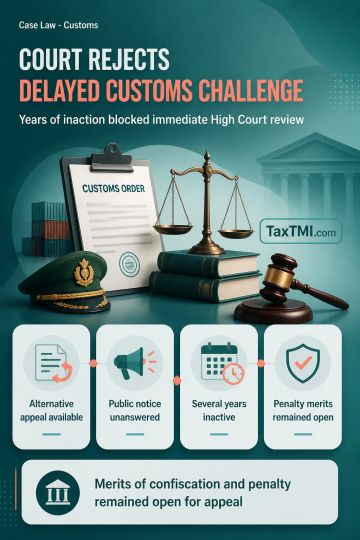
Alternative statutory remedy and unexplained delay barred writ review of customs confiscation adjudication, leaving merits for appellate consideration...
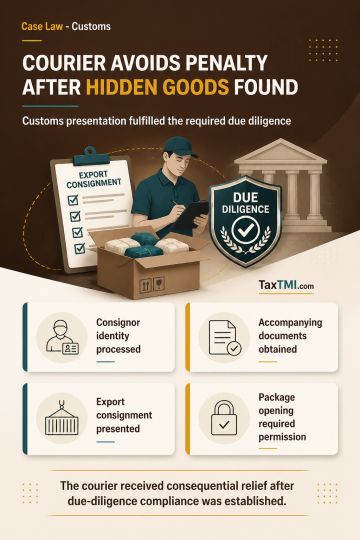
Authorised courier due diligence protects against penalties where declared exports conceal prohibited goods despite proper documentation and customs p...
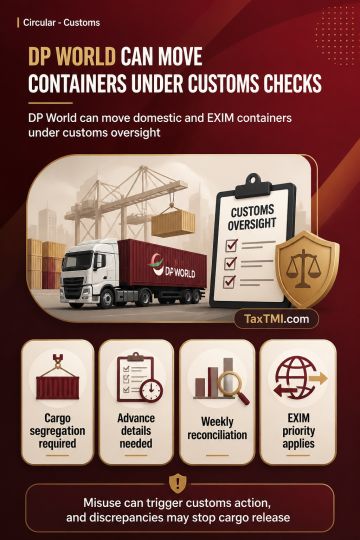
Customs-controlled container movement now extends to DP World facilities, subject to segregation, inspections, reconciliation, and EXIM cargo priority...
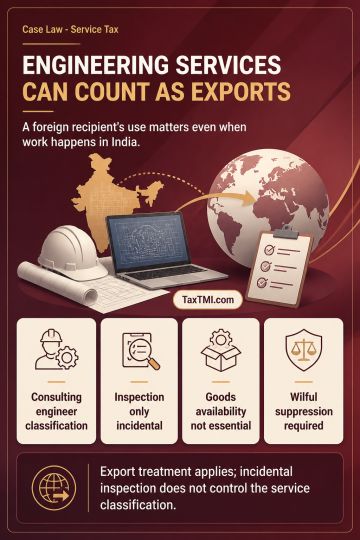
The CESTAT held that services provided to overseas clients, paid in convertible foreign exchange, qualify as export of services under Rule 3 of the POPS Rules, rendering them outside the taxable territory and exempt from service tax. The Tribunal emphasized that the charging provision under Section 66B requires the service to be provided within the taxable territory, which was not established. The Adjudicating Authority failed to identify the specific taxable service or link payment to such service, relying solely on discrepancies in income tax returns without proper examination. The show cause notice was found vague and lacking a clear foundation for demand. Consequently, the service tax demand was quashed, and the impugned order set aside, affirming that mere differences in tax returns cannot substantiate tax liability absent concrete evidence of a taxable event. The appeal was allowed.
The CESTAT held that services provided to overseas clients, paid in convertible foreign exchange, qualify as export of services under Rule 3 of the POPS Rules, rendering them outside the taxable territory and exempt from service tax. The Tribunal emphasized that the charging provision under Section 66B requires the service to be provided within the taxable territory, which was not established. The Adjudicating Authority failed to identify the specific taxable service or link payment to such service, relying solely on discrepancies in income tax returns without proper examination. The show cause notice was found vague and lacking a clear foundation for demand. Consequently, the service tax demand was quashed, and the impugned order set aside, affirming that mere differences in tax returns cannot substantiate tax liability absent concrete evidence of a taxable event. The appeal was allowed.
Note: It is a system-generated summary and is for quick reference only.
 TaxTMI
  TaxTMI
 of 4827









 Join Channel


