Development agreements require legal possession or effective enjoyment for capital gains transfer; permissive possession and deferred consideration de...
Prolonged sterilisation of development rights supports capital-gains treatment, while business-income disallowances cannot govern capital-gains comput...
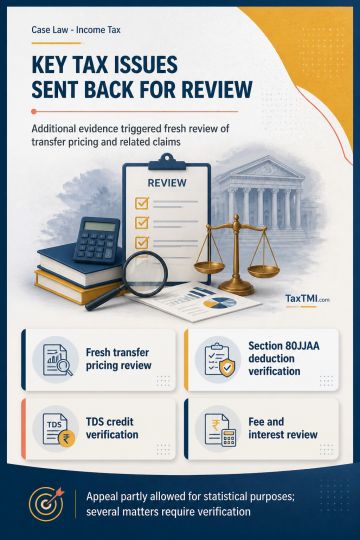
Additional evidence in transfer pricing dispute leads to fresh examination, while tax deductions, TDS credit, fee and refund interest require verifica...
Category II AIF pass-through taxation preserves non-business income character; investment receipts cannot be reclassified without applying recognised ...
Mutual fund maturity rules require proper rollover, redemption, disclosure, and due diligence; investor gains cannot excuse regulatory breaches or pen...
The HC dismissed the petition challenging the respondents' jurisdiction and penalty imposition, affirming that due process was followed. The consignment was intercepted from the driver, who produced relevant documents; notices were issued accordingly, and physical verification occurred in his presence. The petitioner, as the sole authorized signatory, was granted a reasonable opportunity to be heard, both through written submissions and legal representation. The adjudicating and appellate authorities thoroughly considered the petitioner's contentions before confirming the penalty. The Court held that mens rea is not required to establish liability for willful tax evasion under the relevant statute. Precedents cited by the petitioner were distinguished or deemed inapplicable. The Court found the petition meritless and set aside the impugned order, thereby upholding the penalty and dismissing the writ petition.
The HC dismissed the petition challenging the respondents' jurisdiction and penalty imposition, affirming that due process was followed. The consignment was intercepted from the driver, who produced relevant documents; notices were issued accordingly, and physical verification occurred in his presence. The petitioner, as the sole authorized signatory, was granted a reasonable opportunity to be heard, both through written submissions and legal representation. The adjudicating and appellate authorities thoroughly considered the petitioner's contentions before confirming the penalty. The Court held that mens rea is not required to establish liability for willful tax evasion under the relevant statute. Precedents cited by the petitioner were distinguished or deemed inapplicable. The Court found the petition meritless and set aside the impugned order, thereby upholding the penalty and dismissing the writ petition.
Note: It is a system-generated summary and is for quick reference only.
 TaxTMI
 of 4807
















 Join Channel


 TaxTMI