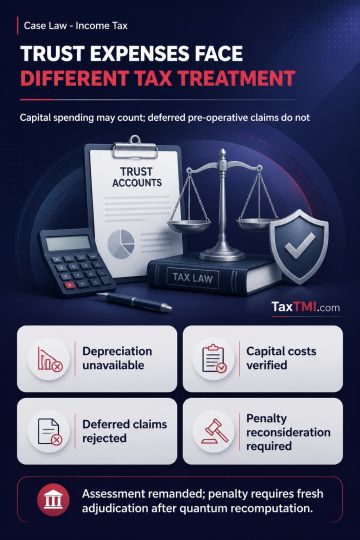
Charitable trust income application permits verified capital expenditure but rejects deferred pre-operative claims and requires reconsideration of con...
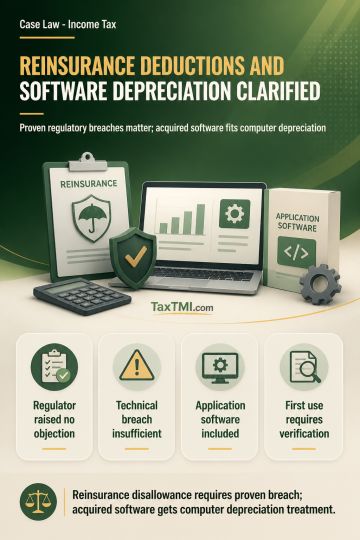
Reinsurance premium deductions require established regulatory breaches, while independently acquired software qualifies within the computer depreciati...
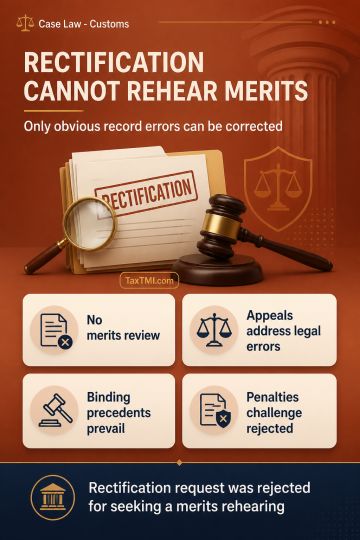
Rectification of mistake remains limited to self-evident record errors, preventing merits review through miscellaneous applications and preserving fin...
Tender creditworthiness conditions may extend to de facto Promoter Directors, with post-participation challenges generally barred absent arbitrariness...
Corporate representation in PMLA summons proceedings permitted through an authorised signatory, subject to directors' continuing cooperation and atten...
The HC dismissed the petition challenging the respondents' jurisdiction and penalty imposition, affirming that due process was followed. The consignment was intercepted from the driver, who produced relevant documents; notices were issued accordingly, and physical verification occurred in his presence. The petitioner, as the sole authorized signatory, was granted a reasonable opportunity to be heard, both through written submissions and legal representation. The adjudicating and appellate authorities thoroughly considered the petitioner's contentions before confirming the penalty. The Court held that mens rea is not required to establish liability for willful tax evasion under the relevant statute. Precedents cited by the petitioner were distinguished or deemed inapplicable. The Court found the petition meritless and set aside the impugned order, thereby upholding the penalty and dismissing the writ petition.
The HC dismissed the petition challenging the respondents' jurisdiction and penalty imposition, affirming that due process was followed. The consignment was intercepted from the driver, who produced relevant documents; notices were issued accordingly, and physical verification occurred in his presence. The petitioner, as the sole authorized signatory, was granted a reasonable opportunity to be heard, both through written submissions and legal representation. The adjudicating and appellate authorities thoroughly considered the petitioner's contentions before confirming the penalty. The Court held that mens rea is not required to establish liability for willful tax evasion under the relevant statute. Precedents cited by the petitioner were distinguished or deemed inapplicable. The Court found the petition meritless and set aside the impugned order, thereby upholding the penalty and dismissing the writ petition.
Note: It is a system-generated summary and is for quick reference only.
 TaxTMI
 of 4805












 Join Channel


 TaxTMI
