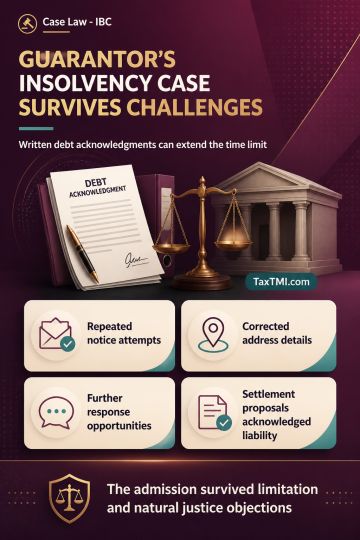
Service of notice and contractual debt acknowledgment preserved insolvency admission against a corporate guarantor despite limitation and natural just...
Original works exemption excludes standalone boulder transportation, leaving subcontracted railway-project transport services subject to service tax l...
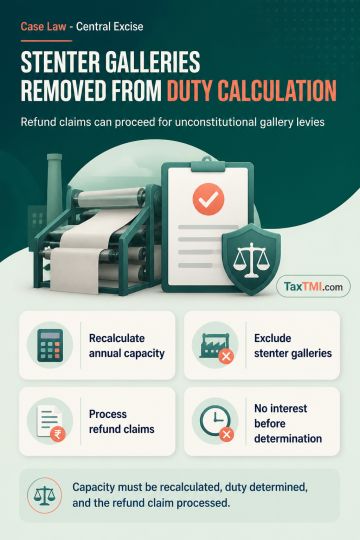
Annual production capacity determinations excluding stenter galleries support refunds for unconstitutional excise levies without an unjust-enrichment ...
Vicarious liability for cheque dishonour requires specific allegations of responsibility and cheque signatory; generic director allegations cannot sus...
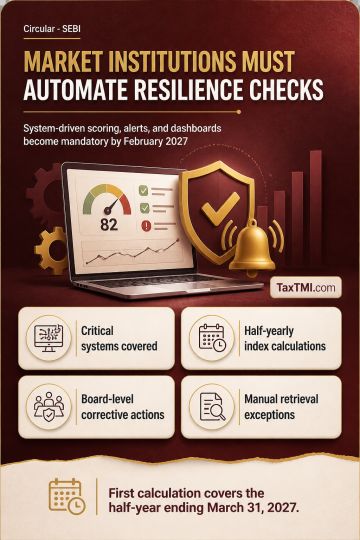
IT Resilience Index requires market infrastructure institutions to automate resilience scoring, early warnings, and continuous service-delivery monito...
The CESTAT overturned the imposition of penalties under section 117 of the Customs Act, 1962, arising from alleged violations including improper storage, lack of solvency certificates, inadequate surveillance, and deficient signage and digital signatures. The tribunal found that the licensing authority improperly relied on routine invocation of extended limitation periods without considering the broader statutory evolution of custodianship and the liberalized assessment regime. Minor infractions, especially those rectified, do not warrant penal action when they do not significantly impact revenue protection. Consequently, the tribunal held that the penalty imposition lacked substantive cause, and the invocation of section 111(j) was unfounded. The impugned order was set aside, and the appeal was allowed.
The CESTAT overturned the imposition of penalties under section 117 of the Customs Act, 1962, arising from alleged violations including improper storage, lack of solvency certificates, inadequate surveillance, and deficient signage and digital signatures. The tribunal found that the licensing authority improperly relied on routine invocation of extended limitation periods without considering the broader statutory evolution of custodianship and the liberalized assessment regime. Minor infractions, especially those rectified, do not warrant penal action when they do not significantly impact revenue protection. Consequently, the tribunal held that the penalty imposition lacked substantive cause, and the invocation of section 111(j) was unfounded. The impugned order was set aside, and the appeal was allowed.
Note: It is a system-generated summary and is for quick reference only.
 TaxTMI
  TaxTMI
 of 4828







 Join Channel