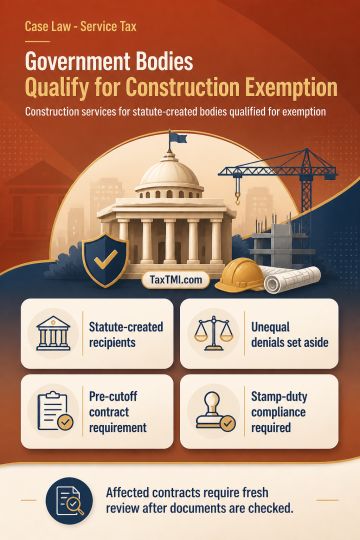
Governmental authority status supports construction-service exemption, while pre-cutoff contract and stamp-duty compliance requires verification on re...
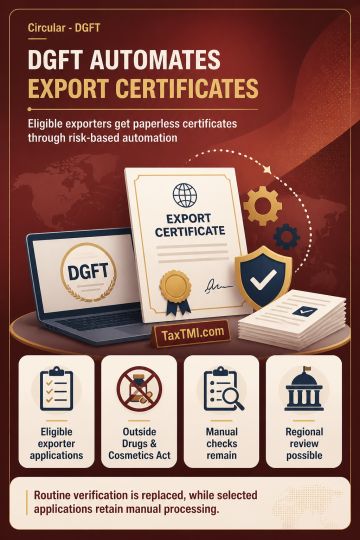
Automated Free Sale and Commerce Certificates enable paperless processing while retaining risk-based manual verification for selected exporter applica...
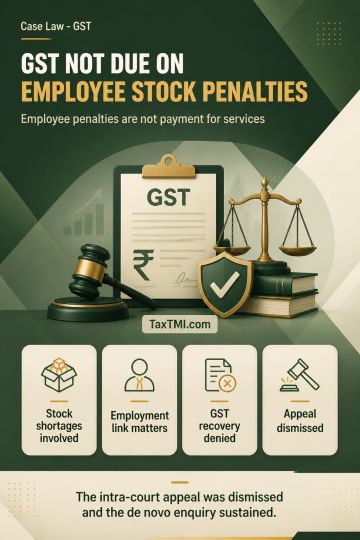
Employee stock-shortage penalties do not constitute consideration for services, preventing GST collection under Schedule II in employment relationship...
The NCLAT allowed the appeal, setting aside the impugned order that dismissed the Section 7 application for initiation of CIRP. The Tribunal held that the date of default under the corporate guarantee was not confined to the initial invocation within the Section 10A prohibited period, as the guarantee was a continuing, irrevocable, on-demand guarantee under Section 129 of the Indian Contract Act, 1872. Multiple successive invocations were permissible, and the second invocation, made after the Section 10A period, was based on an updated computation of dues, including additional liabilities. Since the default persisted beyond the exclusion period and the debt remained unpaid, the Section 7 application filed thereafter was maintainable.
The NCLAT allowed the appeal, setting aside the impugned order that dismissed the Section 7 application for initiation of CIRP. The Tribunal held that the date of default under the corporate guarantee was not confined to the initial invocation within the Section 10A prohibited period, as the guarantee was a continuing, irrevocable, on-demand guarantee under Section 129 of the Indian Contract Act, 1872. Multiple successive invocations were permissible, and the second invocation, made after the Section 10A period, was based on an updated computation of dues, including additional liabilities. Since the default persisted beyond the exclusion period and the debt remained unpaid, the Section 7 application filed thereafter was maintainable.
Note: It is a system-generated summary and is for quick reference only.
 TaxTMI
  TaxTMI
 of 4828





 Join Channel


