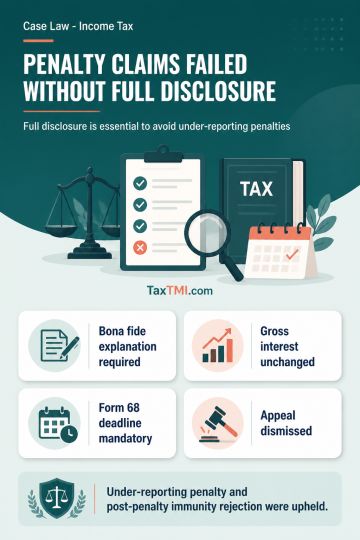
Bona fide disclosure requirements govern under-reporting penalties, and post-penalty immunity applications cannot secure available statutory protectio...
Certificate-of-origin verification procedure governs preferential customs benefits; denial without retroactive verification was set aside with consequ...
Disciplinary Committee jurisdiction and mandatory investigation requirements invalidated cancellation of an insolvency professional's registration and...
The AAR held that job work involving cutting of metallic film rolls used for zari/metallic yarn does not qualify as textile or textile products under chapters 50 to 63 of the CTA '75, as the applicant failed to prove the classification. Consequently, the benefit of concessional GST at 5% under serial No. 26(i)(b) was denied. The job work falls under serial No. 26(id), attracting GST at 12%. The applicant's invoicing at 12% GST aligns with this classification, and the higher rate under general job work category at 18% is inapplicable since the clients are registered persons under GST. Thus, the correct GST rate for the service is 12%.
The AAR held that job work involving cutting of metallic film rolls used for zari/metallic yarn does not qualify as textile or textile products under chapters 50 to 63 of the CTA '75, as the applicant failed to prove the classification. Consequently, the benefit of concessional GST at 5% under serial No. 26(i)(b) was denied. The job work falls under serial No. 26(id), attracting GST at 12%. The applicant's invoicing at 12% GST aligns with this classification, and the higher rate under general job work category at 18% is inapplicable since the clients are registered persons under GST. Thus, the correct GST rate for the service is 12%.
Note: It is a system-generated summary and is for quick reference only.
 TaxTMI
 of 4805














 Join Channel


 TaxTMI
