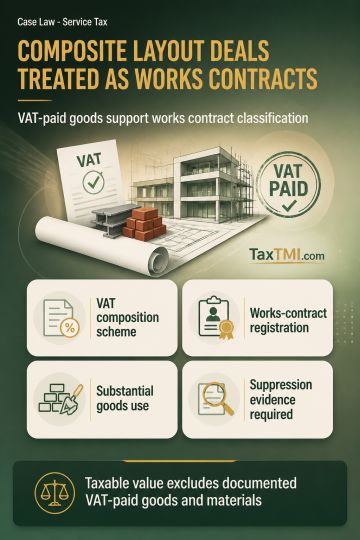
Works contract classification governs composite layout-development contracts where VAT-paid goods are transferred alongside construction and infrastru...
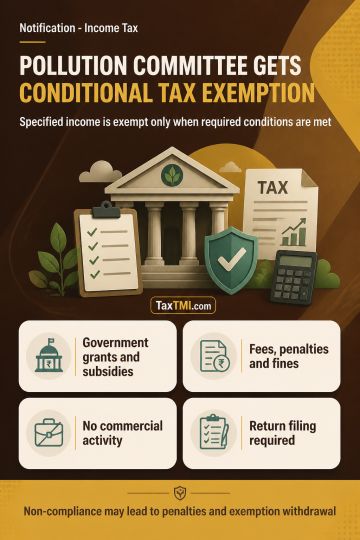
Specified income tax exemption for pollution control body remains conditional on non-commercial activity, unchanged income character, and return filin...
Jurisdictional facts in certificate-of-origin discrepancies can support customs show-cause proceedings, leaving factual explanations for departmental ...
The AAR held that job work involving cutting of metallic film rolls used for zari/metallic yarn does not qualify as textile or textile products under chapters 50 to 63 of the CTA '75, as the applicant failed to prove the classification. Consequently, the benefit of concessional GST at 5% under serial No. 26(i)(b) was denied. The job work falls under serial No. 26(id), attracting GST at 12%. The applicant's invoicing at 12% GST aligns with this classification, and the higher rate under general job work category at 18% is inapplicable since the clients are registered persons under GST. Thus, the correct GST rate for the service is 12%.
The AAR held that job work involving cutting of metallic film rolls used for zari/metallic yarn does not qualify as textile or textile products under chapters 50 to 63 of the CTA '75, as the applicant failed to prove the classification. Consequently, the benefit of concessional GST at 5% under serial No. 26(i)(b) was denied. The job work falls under serial No. 26(id), attracting GST at 12%. The applicant's invoicing at 12% GST aligns with this classification, and the higher rate under general job work category at 18% is inapplicable since the clients are registered persons under GST. Thus, the correct GST rate for the service is 12%.
Note: It is a system-generated summary and is for quick reference only.
 TaxTMI
 of 4805










 Join Channel


 TaxTMI