Patent-settlement expenditure treated as commercially expedient revenue outlay, with foreign-law restrictions inapplicable before the prospective amen...
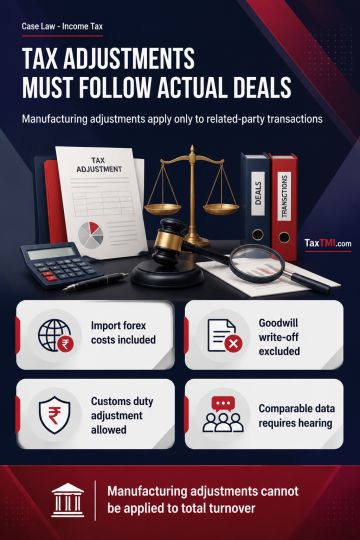
International transaction benchmarking restricts transfer pricing adjustments to associated-enterprise dealings, while functional comparability govern...
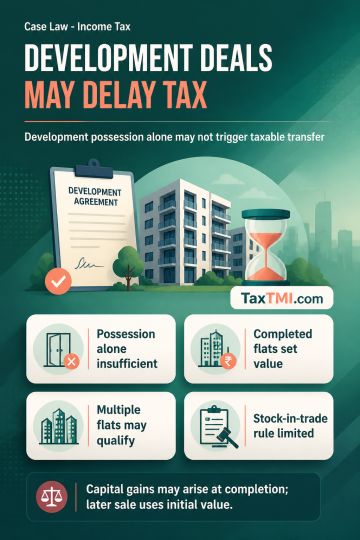
Joint development agreements defer taxable transfer where possession lacks part performance, while completed flats determine consideration and exempti...
Passenger baggage re-export requires true declaration and cannot be granted indirectly through discretionary redemption of undeclared prohibited goods...
The AAR held that job work involving cutting of metallic film rolls used for zari/metallic yarn does not qualify as textile or textile products under chapters 50 to 63 of the CTA '75, as the applicant failed to prove the classification. Consequently, the benefit of concessional GST at 5% under serial No. 26(i)(b) was denied. The job work falls under serial No. 26(id), attracting GST at 12%. The applicant's invoicing at 12% GST aligns with this classification, and the higher rate under general job work category at 18% is inapplicable since the clients are registered persons under GST. Thus, the correct GST rate for the service is 12%.
The AAR held that job work involving cutting of metallic film rolls used for zari/metallic yarn does not qualify as textile or textile products under chapters 50 to 63 of the CTA '75, as the applicant failed to prove the classification. Consequently, the benefit of concessional GST at 5% under serial No. 26(i)(b) was denied. The job work falls under serial No. 26(id), attracting GST at 12%. The applicant's invoicing at 12% GST aligns with this classification, and the higher rate under general job work category at 18% is inapplicable since the clients are registered persons under GST. Thus, the correct GST rate for the service is 12%.
Note: It is a system-generated summary and is for quick reference only.
 TaxTMI
 of 4801





 Join Channel


 TaxTMI