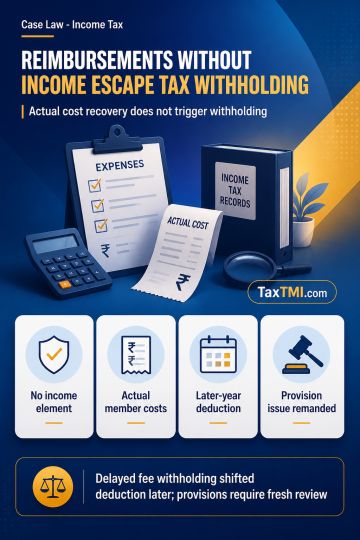
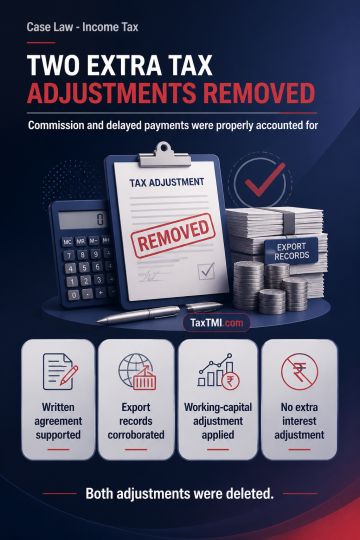
Pure reimbursement without income element escapes tax withholding, while delayed withholding and unsupported provisions face deferred or renewed scrut...
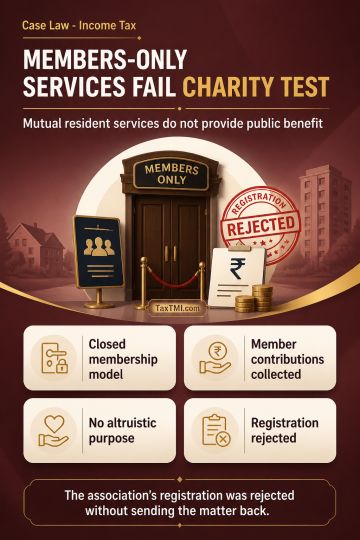
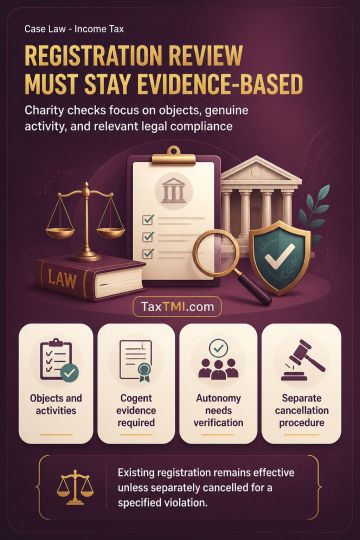
Public benefit requirement defeats charitable registration where residents' association services are reciprocal, member-only facilities governed by mu...
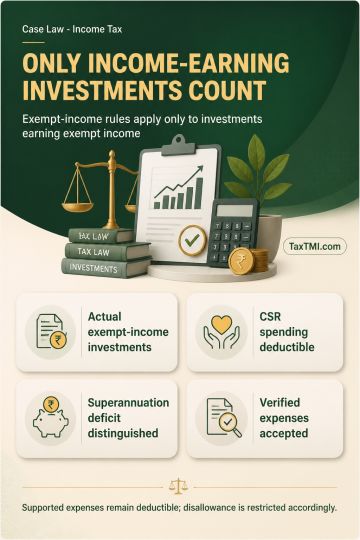
Exempt-income expenditure disallowance is confined to investments that actually generated exempt income, while supported business expenses remain dedu...
Objective characteristics and principal use govern mining-tyre classification, while fresh advance ruling applications may rely on additional technica...
The HC upheld the findings of the CIT(A) and ITAT that the transfer of divisions to two companies did not constitute a 'demerger' under Section 72A(4) of the IT Act. The court confirmed that for Section 72A(4) to apply, there must be a transfer of all assets and liabilities of the division to the resulting company, and consideration must be paid by share issuance to the shareholders of the demerged company. Here, only specified assets and liabilities were transferred, and consideration was paid in cash, approved under company law. Consequently, carry forward of business loss and unabsorbed depreciation was permitted, and no substantial question of law arose.
The HC upheld the findings of the CIT(A) and ITAT that the transfer of divisions to two companies did not constitute a 'demerger' under Section 72A(4) of the IT Act. The court confirmed that for Section 72A(4) to apply, there must be a transfer of all assets and liabilities of the division to the resulting company, and consideration must be paid by share issuance to the shareholders of the demerged company. Here, only specified assets and liabilities were transferred, and consideration was paid in cash, approved under company law. Consequently, carry forward of business loss and unabsorbed depreciation was permitted, and no substantial question of law arose.
Note: It is a system-generated summary and is for quick reference only.
 TaxTMI
 of 4803




 Join Channel


 TaxTMI
