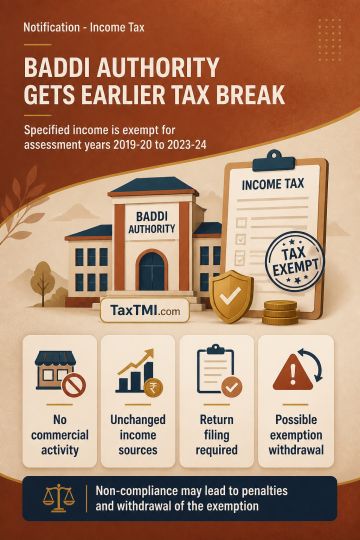
Specified development authority income receives retrospective tax exemption, subject to non-commercial activity, unchanged income sources, and return-...
Unified Brand India framework introduces voluntary Trust Mark certification and funding support for export branding, packaging and global promotional ...
Origin Declaration authentication governs preferential tariff claims under India-UK CETA, requiring a validated reference number before import clearan...
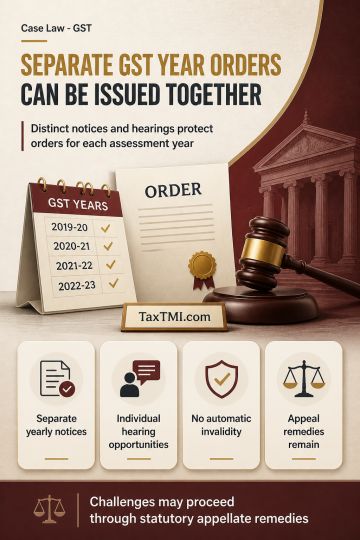
Separate assessment orders for different years remain valid when distinct notices and hearing opportunities prevent prejudice from combined proceeding...
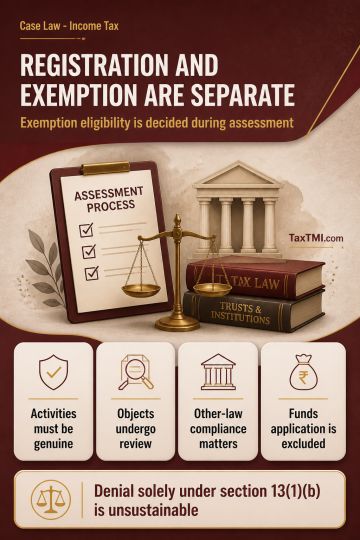
Defined public benefit can retain charitable character; registration renewal requires examining genuine activities and legal compliance, not surplus a...
Capital reduction is distinct from share buy-back, preventing buy-back tax; restructuring interest and related business deductions also survive scruti...
The ITAT upheld the exemption under section 11 for the assessee, a development authority, recognizing it as a charitable entity within the meaning of section 2(15), consistent with prior decisions and Supreme Court precedents. The proviso to section 2(15) was held inapplicable, as the assessee's object included providing shelter to the homeless. Additionally, amounts credited to the infrastructure development and reserve funds were held not taxable in the assessee's hands, since these funds belong to the State and the assessee acts merely as custodian. The tribunal concluded that utilization of these funds for general utility further supported exemption, thereby deciding all grounds in favor of the assessee.
The ITAT upheld the exemption under section 11 for the assessee, a development authority, recognizing it as a charitable entity within the meaning of section 2(15), consistent with prior decisions and Supreme Court precedents. The proviso to section 2(15) was held inapplicable, as the assessee's object included providing shelter to the homeless. Additionally, amounts credited to the infrastructure development and reserve funds were held not taxable in the assessee's hands, since these funds belong to the State and the assessee acts merely as custodian. The tribunal concluded that utilization of these funds for general utility further supported exemption, thereby deciding all grounds in favor of the assessee.
Note: It is a system-generated summary and is for quick reference only.
 TaxTMI
 of 4805













 Join Channel


 TaxTMI
