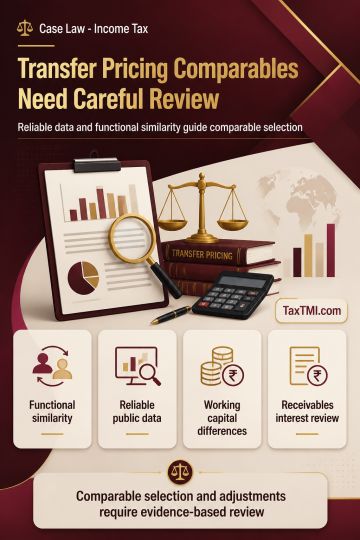
Transfer pricing comparability requires functional alignment, reliable financial data, and careful review of working capital and receivables adjustmen...
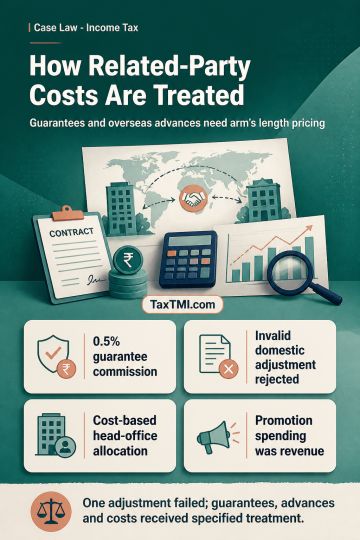
Transfer pricing rules require benchmarking corporate guarantees and associated-enterprise advances, while invalid domestic-transaction adjustments ca...
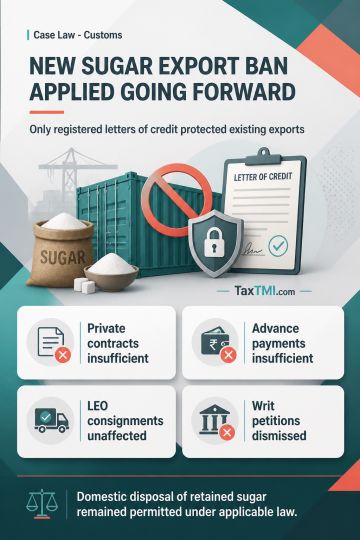
Prospective sugar export prohibition required registered letters of credit; private contracts and export quotas created no enforceable continuation ri...
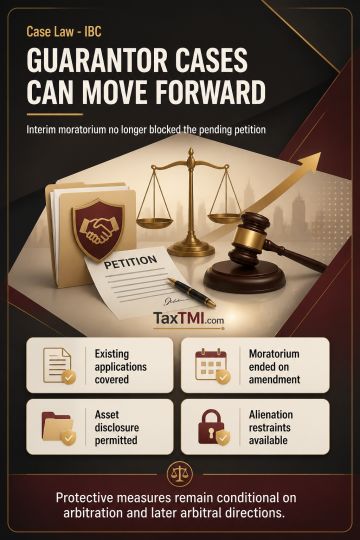
Retroactive interim-moratorium exclusion permits protective asset disclosure and preservation measures against personal guarantors pending arbitration...
Page of 4798
Press 'Enter' after typing page number.
461 to 480 of 95957 Results
❮
❯
❯❯
0 / 200
Expand Note
Add to Folder
No Folders have been created
+
Are you sure you want to delete "My most important" ?
The ITAT upheld the exemption under section 11 for the assessee, a development authority, recognizing it as a charitable entity within the meaning of section 2(15), consistent with prior decisions and Supreme Court precedents. The proviso to section 2(15) was held inapplicable, as the assessee's object included providing shelter to the homeless. Additionally, amounts credited to the infrastructure development and reserve funds were held not taxable in the assessee's hands, since these funds belong to the State and the assessee acts merely as custodian. The tribunal concluded that utilization of these funds for general utility further supported exemption, thereby deciding all grounds in favor of the assessee.
The ITAT upheld the exemption under section 11 for the assessee, a development authority, recognizing it as a charitable entity within the meaning of section 2(15), consistent with prior decisions and Supreme Court precedents. The proviso to section 2(15) was held inapplicable, as the assessee's object included providing shelter to the homeless. Additionally, amounts credited to the infrastructure development and reserve funds were held not taxable in the assessee's hands, since these funds belong to the State and the assessee acts merely as custodian. The tribunal concluded that utilization of these funds for general utility further supported exemption, thereby deciding all grounds in favor of the assessee.
Note: It is a system-generated summary and is for quick reference only.
 TaxTMI
 of 4798




 Join Channel


 TaxTMI