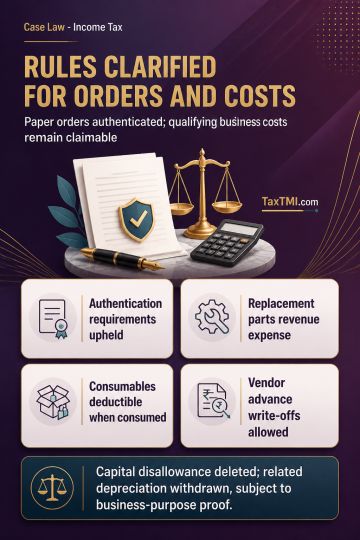
Authentication of paper assessment orders upheld, while qualifying repairs, consumables and vendor advance write-offs remain deductible business claim...
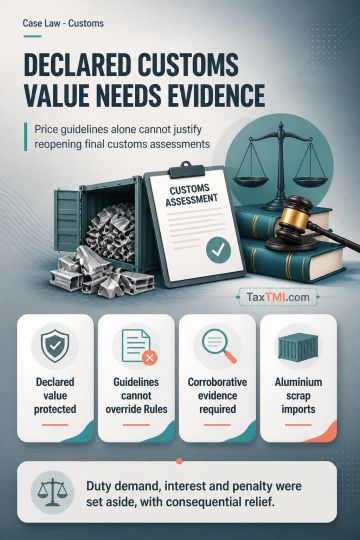
Transaction value cannot be rejected solely on non-statutory valuation guidelines without corroborative evidence supporting reassessment of final cust...
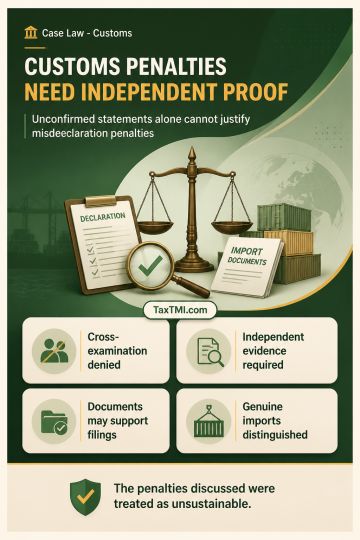
Cross-examination rights and corroborated evidence limit customs penalties for misdeclaration in genuine import transactions involving documented clea...
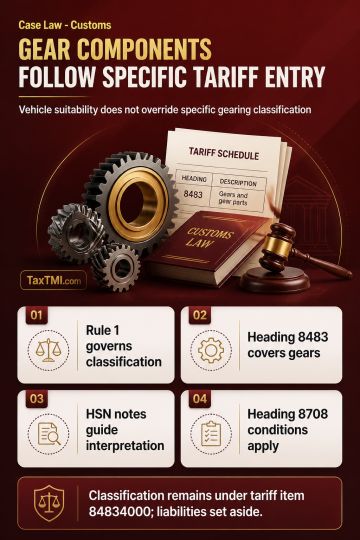
Tariff classification of vehicle gear components follows the specific gearing entry, displacing motor-vehicle parts classification and related liabili...
Page of 4798
Press 'Enter' after typing page number.
621 to 640 of 95955 Results
❮
❯
❯❯
0 / 200
Expand Note
Add to Folder
No Folders have been created
+
Are you sure you want to delete "My most important" ?
The CESTAT upheld the imposition of penalties on the appellant CHA under Sections 112, 114, and 114AA of the Customs Act, 1962, rejecting the appellant's claim of lack of mens rea regarding the mis-declared and overvalued consignment. The Tribunal found no violation of natural justice as additional submissions were considered in the impugned order. The appellant failed to produce the importer or proprietor despite summons and submitted misleading information about delivery of summons. The appellant lacked authorization to receive KYC documents, which were found to be incorrect and unverifiable. Consequently, the Tribunal concluded there was no error apparent on the face of the record and dismissed the rectification application.
The CESTAT upheld the imposition of penalties on the appellant CHA under Sections 112, 114, and 114AA of the Customs Act, 1962, rejecting the appellant's claim of lack of mens rea regarding the mis-declared and overvalued consignment. The Tribunal found no violation of natural justice as additional submissions were considered in the impugned order. The appellant failed to produce the importer or proprietor despite summons and submitted misleading information about delivery of summons. The appellant lacked authorization to receive KYC documents, which were found to be incorrect and unverifiable. Consequently, the Tribunal concluded there was no error apparent on the face of the record and dismissed the rectification application.
Note: It is a system-generated summary and is for quick reference only.
 TaxTMI
 of 4798






 Join Channel


 TaxTMI