Inherited property sale proceeds require capital-gains treatment where ownership is supported by evidence, not suspicion or unverified signature doubt...
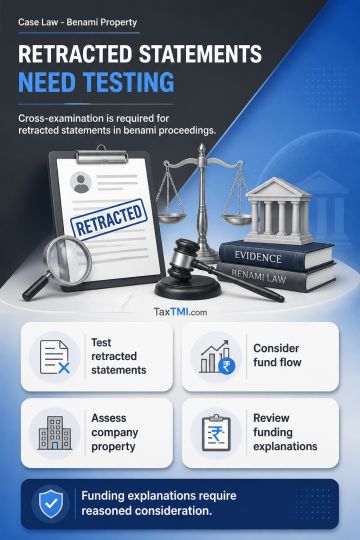
Cross-examination of retracted statements is essential where foundational evidence supports a benami allegation and documented funding explanations re...
Capital-goods exemption covers plant-modernisation accessories, while the import restriction applies only to earlier capital-goods components and spar...
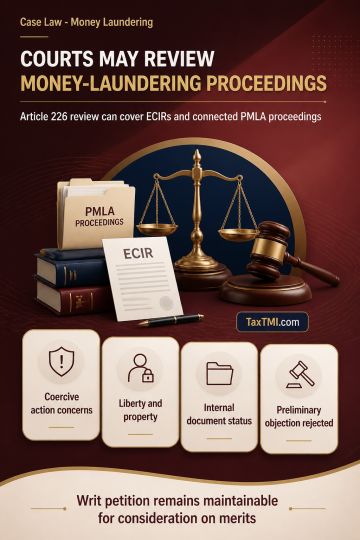
Constitutional judicial review permits challenges to ECIRs and connected money-laundering proceedings where coercive action affects fundamental intere...
CESTAT allowed the appeal, holding that the refund claim for anti-dumping duty was filed within the statutory six-month limitation period prescribed by Section 27 of the Customs Act, 1962. The Tribunal found that the appellant's submission of documents and refund application was timely, and this assertion was not contested by either the Appellate Authority or the department. Consequently, the finding that the claim was time-barred was deemed unsustainable. The portion of the impugned order denying the refund was set aside, and the original order sanctioning the refund of anti-dumping duty to the appellant was restored. The appeal was allowed in favor of the appellant.
CESTAT allowed the appeal, holding that the refund claim for anti-dumping duty was filed within the statutory six-month limitation period prescribed by Section 27 of the Customs Act, 1962. The Tribunal found that the appellant's submission of documents and refund application was timely, and this assertion was not contested by either the Appellate Authority or the department. Consequently, the finding that the claim was time-barred was deemed unsustainable. The portion of the impugned order denying the refund was set aside, and the original order sanctioning the refund of anti-dumping duty to the appellant was restored. The appeal was allowed in favor of the appellant.
Note: It is a system-generated summary and is for quick reference only.
 TaxTMI
 of 4792










 Join Channel


 TaxTMI