Tax deduction compliance and payee income recognition govern consultancy disallowance, while no exempt income prevents related expenditure disallowanc...
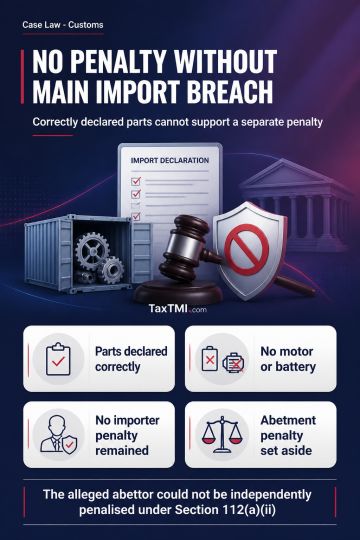
Derivative abetment liability fails when correctly declared imported components establish no underlying improper importation by the principal importer...
Tax exemption for regulatory authority income applies retrospectively, subject to non-commercial activity, unchanged income sources, and return filing...
Page of 4794
Press 'Enter' after typing page number.
481 to 500 of 95872 Results
❮
❯
❯❯
0 / 200
Expand Note
Add to Folder
No Folders have been created
+
Are you sure you want to delete "My most important" ?
CESTAT held that Central Excise officers possess jurisdiction to issue show cause notices for recovery of customs duty from EOUs under their administrative control, affirming the validity of notifications and circulars delegating such authority. However, the department failed to substantiate the clandestine removal allegations with credible evidence or proper documentation, rendering duty demands unsustainable. Procedural lapses, such as expired warehousing licenses during stock transfers between EOUs, were deemed insufficient to justify duty recovery. Consequently, demands and penalties related to shortages and clearances were set aside. The tribunal remanded issues concerning duty on deemed exports to certain parties for fresh adjudication. The appeal was allowed in part, quashing most demands while directing reconsideration of specific deemed export claims.
CESTAT held that Central Excise officers possess jurisdiction to issue show cause notices for recovery of customs duty from EOUs under their administrative control, affirming the validity of notifications and circulars delegating such authority. However, the department failed to substantiate the clandestine removal allegations with credible evidence or proper documentation, rendering duty demands unsustainable. Procedural lapses, such as expired warehousing licenses during stock transfers between EOUs, were deemed insufficient to justify duty recovery. Consequently, demands and penalties related to shortages and clearances were set aside. The tribunal remanded issues concerning duty on deemed exports to certain parties for fresh adjudication. The appeal was allowed in part, quashing most demands while directing reconsideration of specific deemed export claims.
Note: It is a system-generated summary and is for quick reference only.
 TaxTMI
 of 4794













 Join Channel


 TaxTMI
