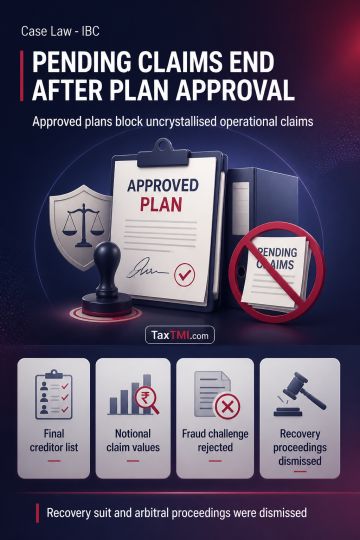
Clean slate principle extinguishes uncrystallised operational claims and bars continuation of pending recovery and arbitral proceedings after plan app...
Works contract classification governs composite layout-development contracts where VAT-paid goods are transferred alongside construction and infrastru...
The CESTAT held that the extended period of limitation could not be invoked against the appellant, as the service tax liability on food and beverages was under judicial consideration during the relevant period, granting the appellant the benefit of the doubt. The Department's delayed communication was deemed a deliberate attempt to unjustifiably extend the limitation period. There was no evidence of suppression or intent to evade tax by the appellant, who had cooperated fully. Precedents emphasize the necessity of a prima facie finding of willful suppression or fraud to invoke extended limitation. Consequently, the show cause notice was held time-barred, the impugned order was set aside, and the appeal allowed without adjudicating on merits.
The CESTAT held that the extended period of limitation could not be invoked against the appellant, as the service tax liability on food and beverages was under judicial consideration during the relevant period, granting the appellant the benefit of the doubt. The Department's delayed communication was deemed a deliberate attempt to unjustifiably extend the limitation period. There was no evidence of suppression or intent to evade tax by the appellant, who had cooperated fully. Precedents emphasize the necessity of a prima facie finding of willful suppression or fraud to invoke extended limitation. Consequently, the show cause notice was held time-barred, the impugned order was set aside, and the appeal allowed without adjudicating on merits.
Note: It is a system-generated summary and is for quick reference only.
 TaxTMI
 of 4803






 Join Channel


 TaxTMI
