Customs Broker association membership becomes mandatory in the operating jurisdiction, with exclusive membership and limited compliance-time relaxatio...
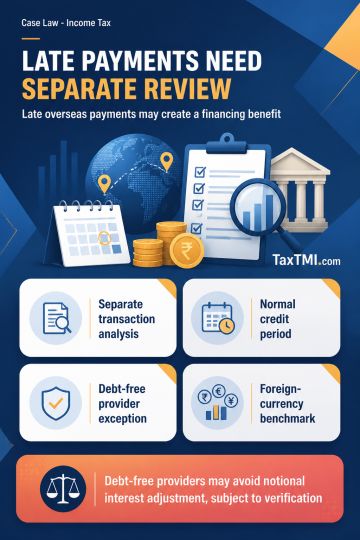
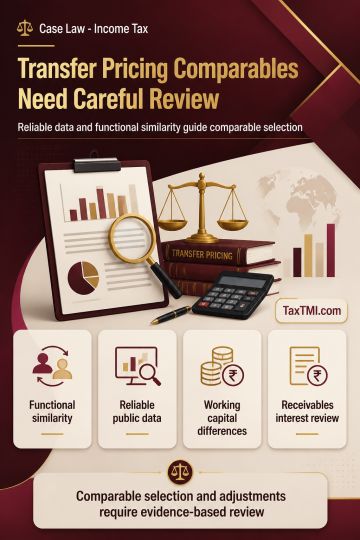
Transfer pricing comparability requires functional alignment, reliable financial data, and careful review of working capital and receivables adjustmen...
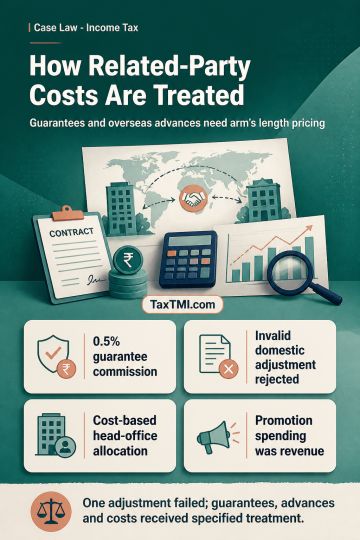
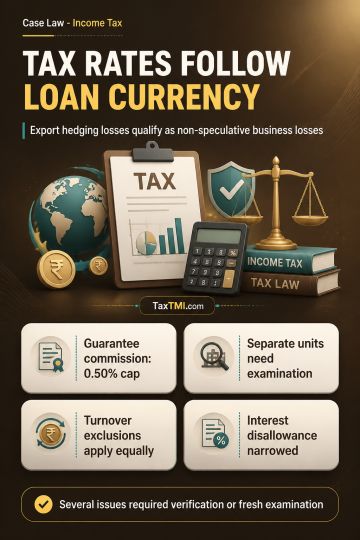
Transfer pricing rules require benchmarking corporate guarantees and associated-enterprise advances, while invalid domestic-transaction adjustments ca...
Page of 4788
Press 'Enter' after typing page number.
241 to 260 of 95749 Results
❮
❯
❯❯
0 / 200
Expand Note
Add to Folder
No Folders have been created
+
Are you sure you want to delete "My most important" ?
The CESTAT overturned the impugned order that classified the appellant's services as those of an 'intermediary' under Rule 2(f) of the Place of Provision of Services Rules, 2012, holding this classification unsustainable. The tribunal found that the appellant's provision of marketing, promotional, and after-sales services to its foreign parent entity constituted export of services under the relevant Export Rules, as the benefit of such services accrued outside India. Consequently, the denial of refund claims was set aside, and the appellant was held eligible for refund of Cenvat credit under Rule 5 of the Cenvat Credit Rules, 2004. The appeal was allowed, confirming the appellant's status as an exporter rather than an intermediary.
The CESTAT overturned the impugned order that classified the appellant's services as those of an 'intermediary' under Rule 2(f) of the Place of Provision of Services Rules, 2012, holding this classification unsustainable. The tribunal found that the appellant's provision of marketing, promotional, and after-sales services to its foreign parent entity constituted export of services under the relevant Export Rules, as the benefit of such services accrued outside India. Consequently, the denial of refund claims was set aside, and the appellant was held eligible for refund of Cenvat credit under Rule 5 of the Cenvat Credit Rules, 2004. The appeal was allowed, confirming the appellant's status as an exporter rather than an intermediary.
Note: It is a system-generated summary and is for quick reference only.
 TaxTMI
 of 4788






 Join Channel


 TaxTMI