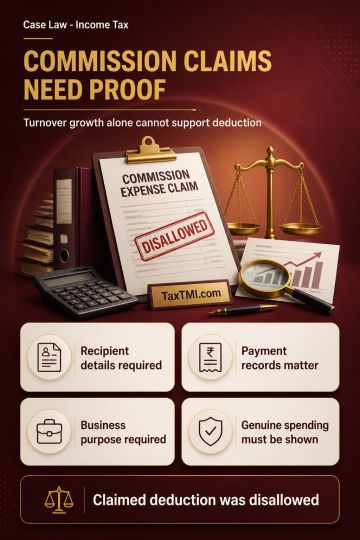
Business expenditure deduction requires proof of genuine commission payments and commercial allowability; turnover growth alone cannot validate the cl...
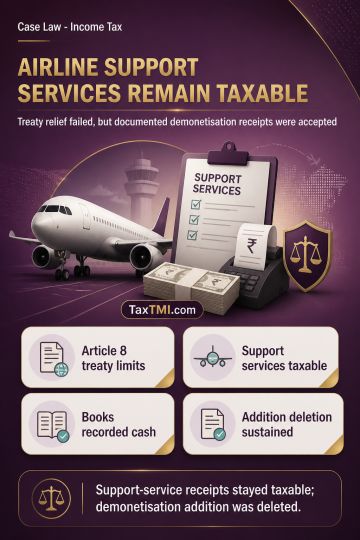
Article 8 treaty coverage excluded third-party airline support services, while documented demonetisation cash receipts remained accepted business inco...
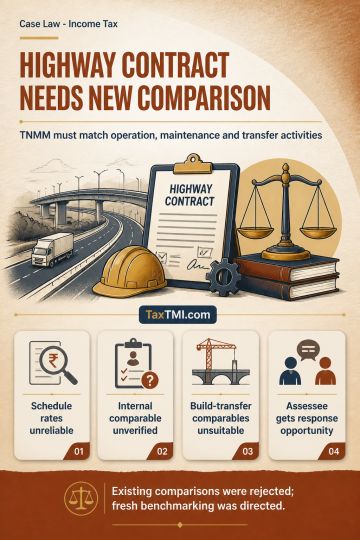
Functional comparability under TNMM requires highway contract benchmarks to reflect operation, maintenance and transfer activities, requiring fresh be...
The CESTAT held that although the appellants and the joint venture company are interconnected undertakings under Section 4(3)(B) of the Central Excise Act, they do not qualify as related persons under sub-clause (ii), (iii), or (iv) of clause (b) of the same provision due to the absence of mutuality of interest in each other's business. The Department's reliance on increased dividends as evidence of interest was rejected, as prior litigation established no such mutuality. Consequently, valuation under Rule 10(a) read with Rule 9 was inapplicable. The tribunal set aside the demand and allowed the appeal, affirming that the valuation must not be based on the provisions invoked by the Department.
The CESTAT held that although the appellants and the joint venture company are interconnected undertakings under Section 4(3)(B) of the Central Excise Act, they do not qualify as related persons under sub-clause (ii), (iii), or (iv) of clause (b) of the same provision due to the absence of mutuality of interest in each other's business. The Department's reliance on increased dividends as evidence of interest was rejected, as prior litigation established no such mutuality. Consequently, valuation under Rule 10(a) read with Rule 9 was inapplicable. The tribunal set aside the demand and allowed the appeal, affirming that the valuation must not be based on the provisions invoked by the Department.
Note: It is a system-generated summary and is for quick reference only.
 TaxTMI
 of 4790




 Join Channel


 TaxTMI
