Service of notice and contractual debt acknowledgment preserved insolvency admission against a corporate guarantor despite limitation and natural just...
Original works exemption excludes standalone boulder transportation, leaving subcontracted railway-project transport services subject to service tax l...
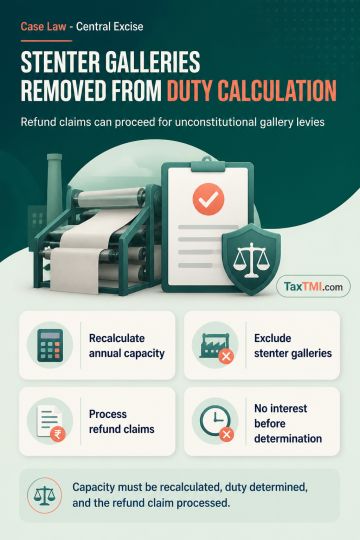
Annual production capacity determinations excluding stenter galleries support refunds for unconstitutional excise levies without an unjust-enrichment ...
Vicarious liability for cheque dishonour requires specific allegations of responsibility and cheque signatory; generic director allegations cannot sus...
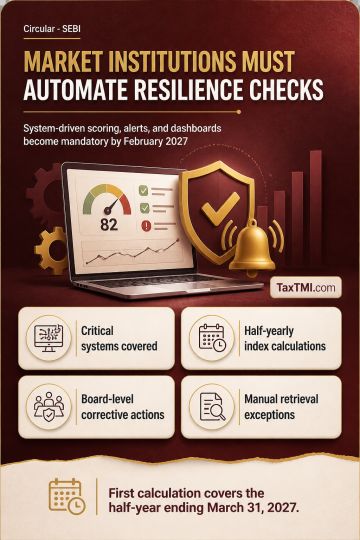
IT Resilience Index requires market infrastructure institutions to automate resilience scoring, early warnings, and continuous service-delivery monito...
ITAT allowed the appeal, holding that the AO's recharacterization of business income as "income from other sources" was legally unsustainable without contrary material evidence. The assessee, a software and networking solutions company, had legitimate revenue from identifiable clients under valid tax invoices. The AO failed to produce incriminating material during search or evidence contradicting the business activities. The tribunal emphasized that quantum of income does not determine business genuineness, noting the assessee's consistent IT business operations accepted in prior assessments. The disallowance of business expenses was unjustified absent findings of bogus or unrelated expenditure. Applying the principle of consistency from Radhasoami Satsang, the tribunal ruled that treatment accepted in earlier years should not be disturbed without factual changes, directing deletion of additions totaling the disputed amounts.
ITAT allowed the appeal, holding that the AO's recharacterization of business income as "income from other sources" was legally unsustainable without contrary material evidence. The assessee, a software and networking solutions company, had legitimate revenue from identifiable clients under valid tax invoices. The AO failed to produce incriminating material during search or evidence contradicting the business activities. The tribunal emphasized that quantum of income does not determine business genuineness, noting the assessee's consistent IT business operations accepted in prior assessments. The disallowance of business expenses was unjustified absent findings of bogus or unrelated expenditure. Applying the principle of consistency from Radhasoami Satsang, the tribunal ruled that treatment accepted in earlier years should not be disturbed without factual changes, directing deletion of additions totaling the disputed amounts.
Note: It is a system-generated summary and is for quick reference only.
 TaxTMI
  TaxTMI
 of 4828

















 Join Channel