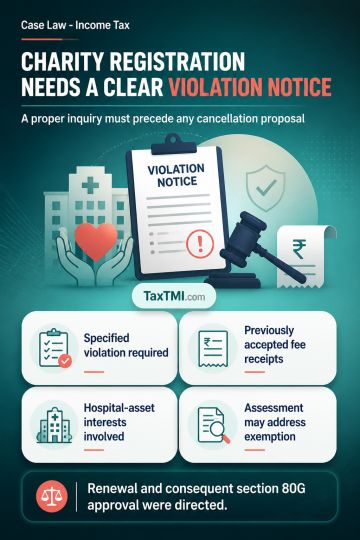
Charitable trust registration requires a specified-violation notice; settled cash deposits and related-party payments did not justify cancellation or ...
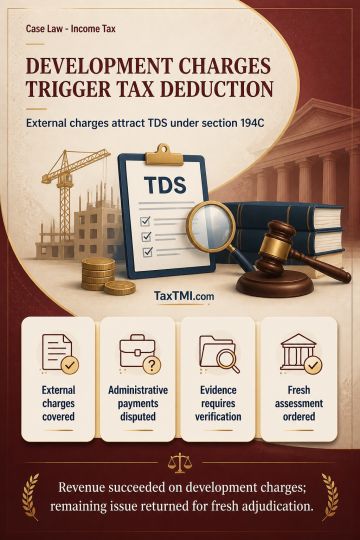
External development charges trigger TDS under section 194C, while disputed administrative payments require factual verification and fresh adjudicatio...
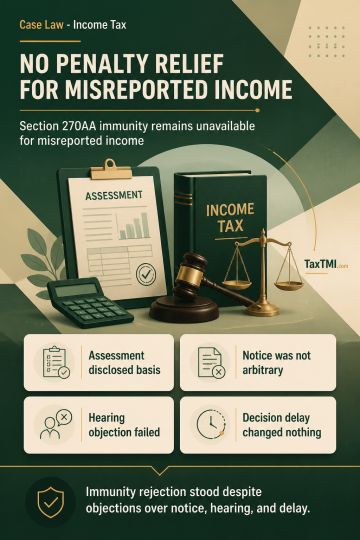
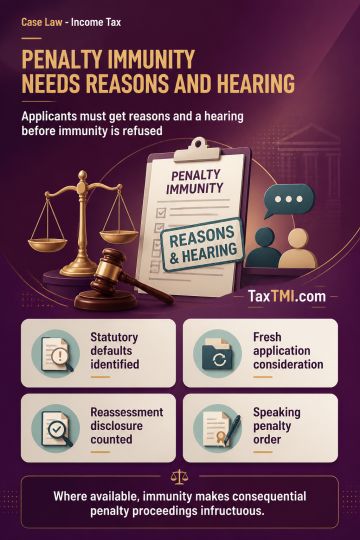
Section 270AA penalty immunity requires identified statutory defaults and a hearing before rejection; reassessment disclosure may constitute under-rep...
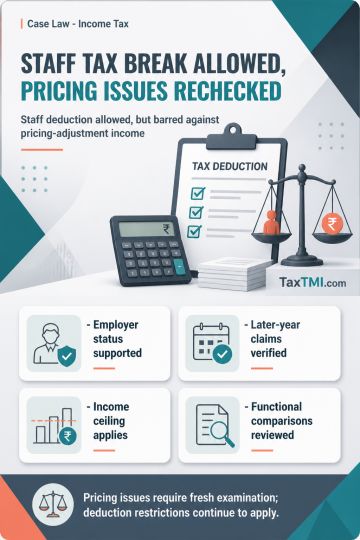
Section 80JJAA employee-cost deduction allowed for deployed staff but barred against transfer-pricing income enhancement, with pricing issues remanded...
Page of 4830
Press 'Enter' after typing page number.
141 to 160 of 96587 Results
❮
❯
❯❯
0 / 200
Expand Note
Add to Folder
No Folders have been created
+
Are you sure you want to delete "My most important" ?
The HC dismissed the appeal in a cheque dishonour case under Section 138 NI Act. The complainant company failed to produce the purported Agreement to Sell dated November 2008, claiming it was torn after execution of a subsequent agreement in July 2009. The court rejected this explanation as untenable, noting that companies maintain records even after cancellation and no copy was produced. Crucially, the admitted liability was only Rs. 75 lakhs while the disputed cheque was for Rs. 1.5 crores. The court held that Section 138 requires the cheque amount to discharge the entire existing debt or liability. Since the complainant failed to prove the underlying legally enforceable debt supporting the cheque, the essential ingredient under Section 138 was not satisfied, warranting dismissal.
The HC dismissed the appeal in a cheque dishonour case under Section 138 NI Act. The complainant company failed to produce the purported Agreement to Sell dated November 2008, claiming it was torn after execution of a subsequent agreement in July 2009. The court rejected this explanation as untenable, noting that companies maintain records even after cancellation and no copy was produced. Crucially, the admitted liability was only Rs. 75 lakhs while the disputed cheque was for Rs. 1.5 crores. The court held that Section 138 requires the cheque amount to discharge the entire existing debt or liability. Since the complainant failed to prove the underlying legally enforceable debt supporting the cheque, the essential ingredient under Section 138 was not satisfied, warranting dismissal.
Note: It is a system-generated summary and is for quick reference only.
 TaxTMI
  TaxTMI
 of 4830






 Join Channel


