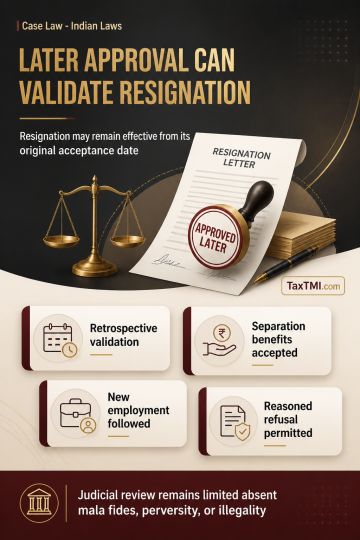
Ratification of resignation acceptance validates separation retrospectively, while withdrawal may be refused through reasoned administrative discretio...
Nature-dependent electricity contracts receive new Ind AS accounting, hedge designation, transition and financial-statement disclosure requirements fr...
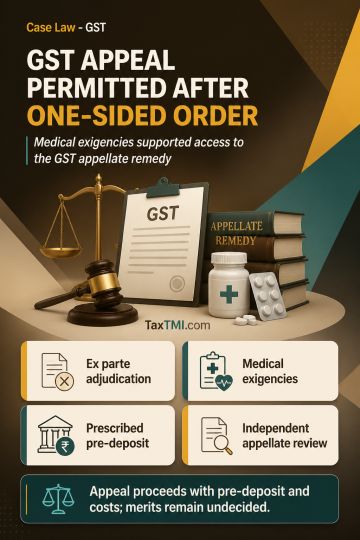
Alternative GST remedy permitted protective writ intervention for ex parte adjudication, preserving independent appellate review of input tax credit d...
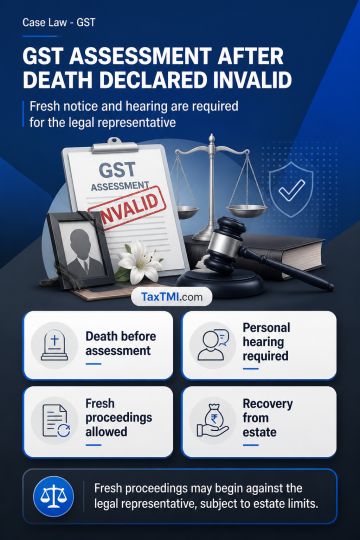
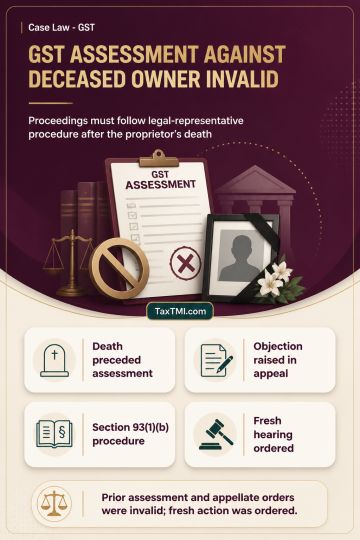
Assessment against deceased sole proprietor requires proceedings against the legal representative, rendering prior assessment and appellate orders inv...
Residential waste collection classification under SAC 999423 defeats composite-supply exemption where facilitating goods are not transferred to the lo...
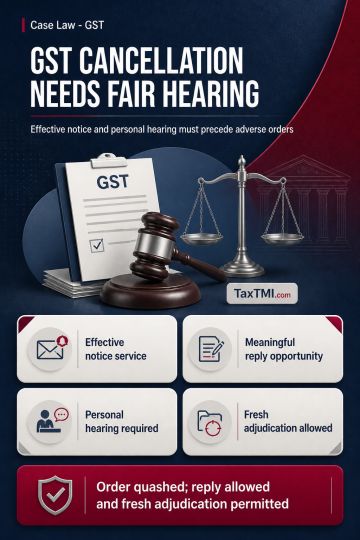
The HC set aside the cancellation order dated 6th August 2024 and the subsequent appellate order dated 21st March 2025, restoring the petitioner's registration. The court found that while registration was cancelled for non-filing of returns, there was no evidence of dubious tax evasion practices. Emphasizing that suspension would be counterproductive to revenue interests as it prevents business operations and tax recovery, the court adopted a pragmatic approach. The restoration was granted conditionally, requiring the petitioner to file all outstanding returns for the default period and pay requisite taxes, interest, fines, and penalties. The court noted that respondents cannot determine final liability without filed returns, making restoration essential for proper tax administration.
The HC set aside the cancellation order dated 6th August 2024 and the subsequent appellate order dated 21st March 2025, restoring the petitioner's registration. The court found that while registration was cancelled for non-filing of returns, there was no evidence of dubious tax evasion practices. Emphasizing that suspension would be counterproductive to revenue interests as it prevents business operations and tax recovery, the court adopted a pragmatic approach. The restoration was granted conditionally, requiring the petitioner to file all outstanding returns for the default period and pay requisite taxes, interest, fines, and penalties. The court noted that respondents cannot determine final liability without filed returns, making restoration essential for proper tax administration.
Note: It is a system-generated summary and is for quick reference only.
 TaxTMI
 of 4798











 Join Channel


 TaxTMI
