Jurisdictional facts in certificate-of-origin discrepancies can support customs show-cause proceedings, leaving factual explanations for departmental ...
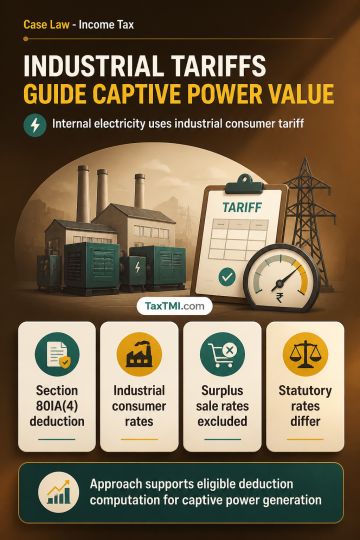
Market value for captive electricity consumption follows industrial consumer tariffs, supporting profit computation for the power generation deduction...
The HC set aside the cancellation order dated 6th August 2024 and the subsequent appellate order dated 21st March 2025, restoring the petitioner's registration. The court found that while registration was cancelled for non-filing of returns, there was no evidence of dubious tax evasion practices. Emphasizing that suspension would be counterproductive to revenue interests as it prevents business operations and tax recovery, the court adopted a pragmatic approach. The restoration was granted conditionally, requiring the petitioner to file all outstanding returns for the default period and pay requisite taxes, interest, fines, and penalties. The court noted that respondents cannot determine final liability without filed returns, making restoration essential for proper tax administration.
The HC set aside the cancellation order dated 6th August 2024 and the subsequent appellate order dated 21st March 2025, restoring the petitioner's registration. The court found that while registration was cancelled for non-filing of returns, there was no evidence of dubious tax evasion practices. Emphasizing that suspension would be counterproductive to revenue interests as it prevents business operations and tax recovery, the court adopted a pragmatic approach. The restoration was granted conditionally, requiring the petitioner to file all outstanding returns for the default period and pay requisite taxes, interest, fines, and penalties. The court noted that respondents cannot determine final liability without filed returns, making restoration essential for proper tax administration.
Note: It is a system-generated summary and is for quick reference only.
 TaxTMI
 of 4805












 Join Channel


 TaxTMI