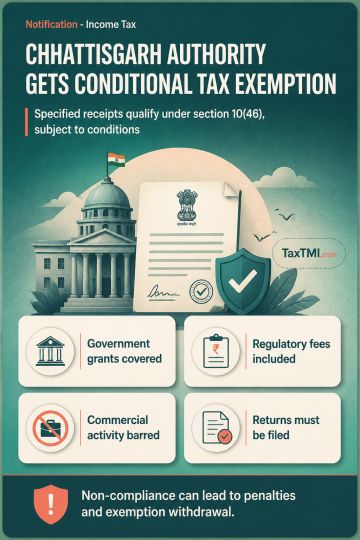
Specified regulatory authority income receives conditional tax exemption, subject to non-commercial activity, unchanged income character, and return f...
Tax exemption for regulatory authority income applies retrospectively, subject to non-commercial activity, unchanged income sources, and return-filing...
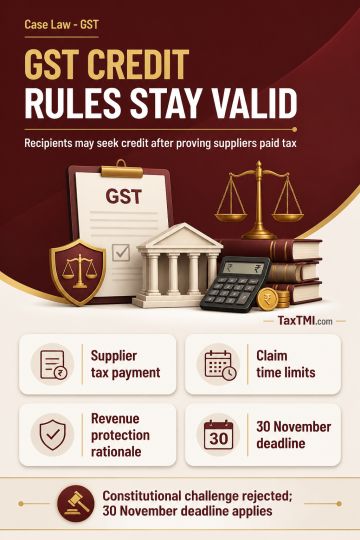
Input tax credit conditions remain constitutionally valid, with eligible recipient claims considered under GST circulars and retrospective filing dead...
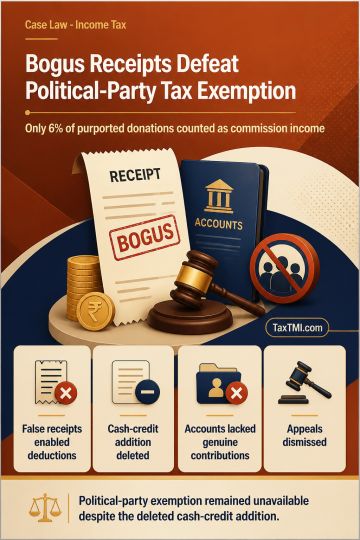
Bogus donation receipts justified commission income assessment and defeated political-party tax exemption for inaccurate accounts and reporting failur...
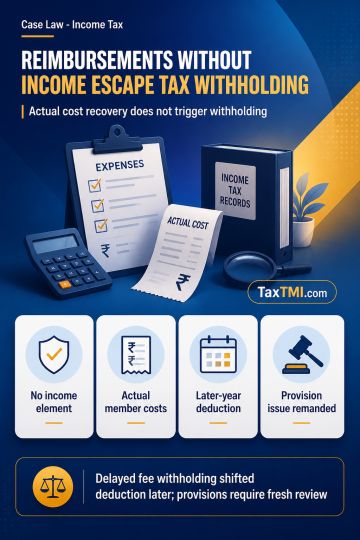
Pure reimbursement without income element escapes tax withholding, while delayed withholding and unsupported provisions face deferred or renewed scrut...
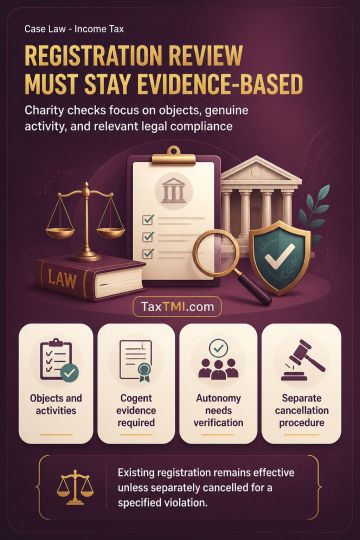
Public benefit requirement defeats charitable registration where residents' association services are reciprocal, member-only facilities governed by mu...
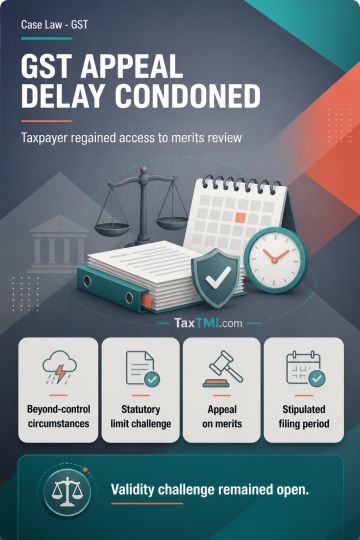
The HC set aside the cancellation order dated 6th August 2024 and the subsequent appellate order dated 21st March 2025, restoring the petitioner's registration. The court found that while registration was cancelled for non-filing of returns, there was no evidence of dubious tax evasion practices. Emphasizing that suspension would be counterproductive to revenue interests as it prevents business operations and tax recovery, the court adopted a pragmatic approach. The restoration was granted conditionally, requiring the petitioner to file all outstanding returns for the default period and pay requisite taxes, interest, fines, and penalties. The court noted that respondents cannot determine final liability without filed returns, making restoration essential for proper tax administration.
The HC set aside the cancellation order dated 6th August 2024 and the subsequent appellate order dated 21st March 2025, restoring the petitioner's registration. The court found that while registration was cancelled for non-filing of returns, there was no evidence of dubious tax evasion practices. Emphasizing that suspension would be counterproductive to revenue interests as it prevents business operations and tax recovery, the court adopted a pragmatic approach. The restoration was granted conditionally, requiring the petitioner to file all outstanding returns for the default period and pay requisite taxes, interest, fines, and penalties. The court noted that respondents cannot determine final liability without filed returns, making restoration essential for proper tax administration.
Note: It is a system-generated summary and is for quick reference only.
 TaxTMI
 of 4805








 Join Channel


 TaxTMI