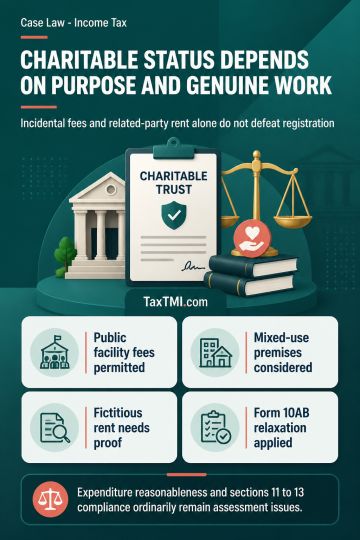
Charitable registration turns on predominant purpose and genuine activities, while incidental fees and related-party rent require supporting adverse m...
MAT book-profit adjustments exclude disallowances for exempt-income expenditure and demerger expenditure unless expressly listed under the statutory c...
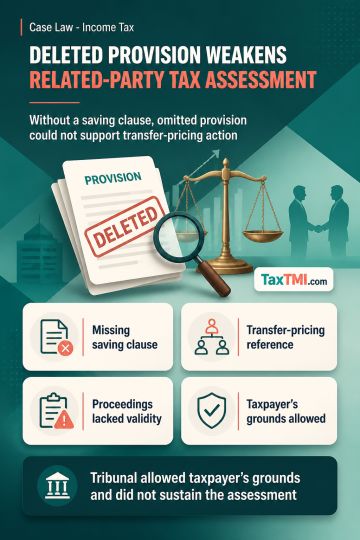
Omitted specified domestic transaction provision invalidates related-party expenditure transfer-pricing references and assessments based on consequent...
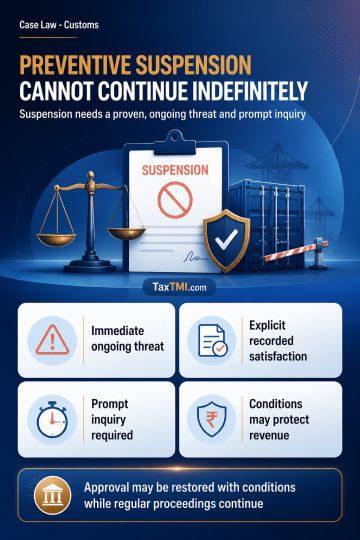
Preventive suspension requires an immediate continuing threat and cannot become indefinite without inquiry, fresh evidence, or proportionate safeguard...
Page of 4800
Press 'Enter' after typing page number.
261 to 280 of 96000 Results
❮
❯
❯❯
0 / 200
Expand Note
Add to Folder
No Folders have been created
+
Are you sure you want to delete "My most important" ?
The HC allowed the writ petition concerning GST penalty under Section 129. The petitioner had violated prescribed conditions but had voluntarily paid the penalty and successfully exported goods. The court determined that while the petitioner was liable for proceedings under Section 129, a lesser penalty was justified. The HC held that export incentives cannot be denied for technical and venial breaches, citing precedent that such minor violations should not result in denial of legitimate benefits. Despite availability of alternate appellate remedy under Section 107, the court exercised jurisdiction to prevent unnecessary litigation. The respondents were directed to appropriate Rs. 25,000 from the amount already paid by petitioner and allow adjustment of the balance against future tax liability.
The HC allowed the writ petition concerning GST penalty under Section 129. The petitioner had violated prescribed conditions but had voluntarily paid the penalty and successfully exported goods. The court determined that while the petitioner was liable for proceedings under Section 129, a lesser penalty was justified. The HC held that export incentives cannot be denied for technical and venial breaches, citing precedent that such minor violations should not result in denial of legitimate benefits. Despite availability of alternate appellate remedy under Section 107, the court exercised jurisdiction to prevent unnecessary litigation. The respondents were directed to appropriate Rs. 25,000 from the amount already paid by petitioner and allow adjustment of the balance against future tax liability.
Note: It is a system-generated summary and is for quick reference only.
 TaxTMI
 of 4800






 Join Channel


 TaxTMI