TNMM functional comparability requires excluding rice manufacturers from a pure Basmati rice trader's benchmark and recognising operating export recei...
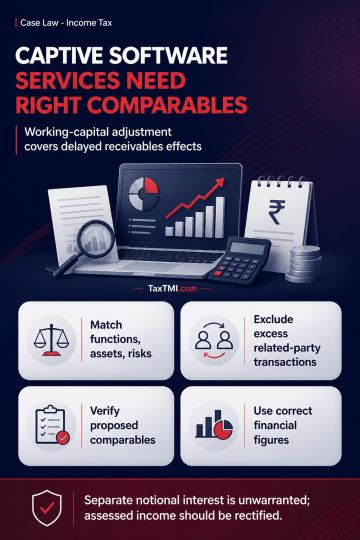
Working-capital adjustment subsumes delayed-receivable effects in TNMM benchmarking of captive software-development services, avoiding separate notion...
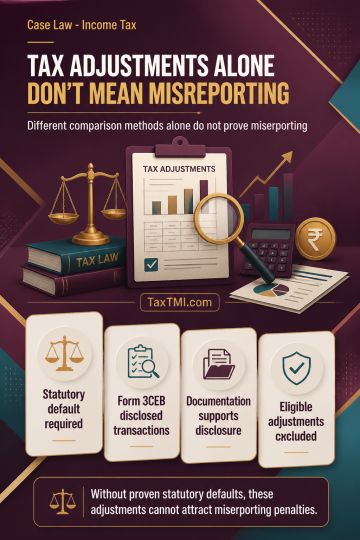
Transfer-pricing comparability requires exclusion of financially illogical super-profit comparables and correction of unsupported annual-report and ma...
Charitable character assessment preserves Section 80G approval despite inclusive spiritual teachings and incidental religious expenditure within the s...
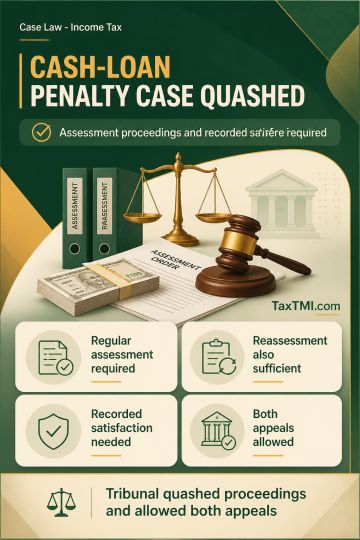
Penalty proceedings for cash-loan acceptance require assessment proceedings and recorded Assessing Officer satisfaction; absent these, the proceedings...
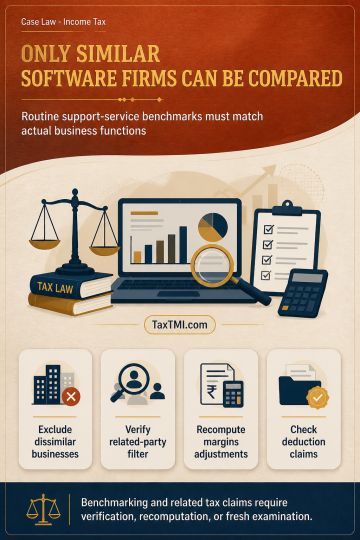
Functional comparability governs software-service benchmarking: dissimilar companies are excluded, while related-party filters, margins and working-ca...
The HC upheld the validity of notices issued under sections 142, 144, 144B, and 147 of the Income-tax Act, rejecting the petitioner's challenge based on alleged violation of natural justice. The court held that the Standard Operating Procedure prescribing seven days' response time constitutes mere administrative guidelines, not binding statutory requirements. Following Supreme Court precedent, the court applied the "prejudice test," determining that technical breach of natural justice does not vitiate an order unless actual prejudice is demonstrated. Despite receiving only four days instead of seven to respond to the show cause notice, the petitioner failed to establish any material prejudice, having received all statutory notices and obtained multiple adjournments but failing to submit responses. The reassessment proceedings were deemed valid.
The HC upheld the validity of notices issued under sections 142, 144, 144B, and 147 of the Income-tax Act, rejecting the petitioner's challenge based on alleged violation of natural justice. The court held that the Standard Operating Procedure prescribing seven days' response time constitutes mere administrative guidelines, not binding statutory requirements. Following Supreme Court precedent, the court applied the "prejudice test," determining that technical breach of natural justice does not vitiate an order unless actual prejudice is demonstrated. Despite receiving only four days instead of seven to respond to the show cause notice, the petitioner failed to establish any material prejudice, having received all statutory notices and obtained multiple adjournments but failing to submit responses. The reassessment proceedings were deemed valid.
Note: It is a system-generated summary and is for quick reference only.
 TaxTMI
  TaxTMI
 of 4830












 Join Channel


