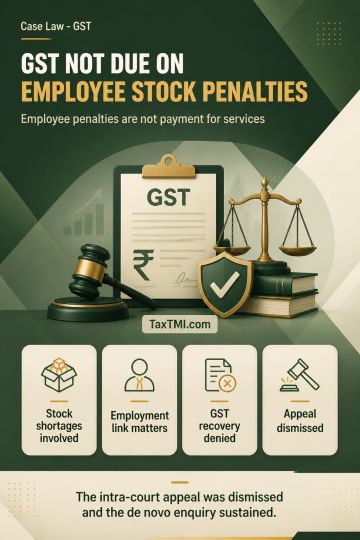
Employee stock-shortage penalties do not constitute consideration for services, preventing GST collection under Schedule II in employment relationship...
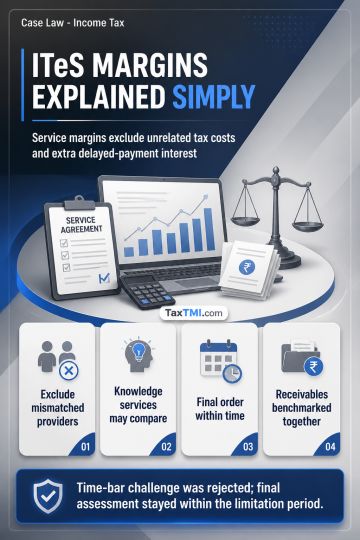
Transfer-pricing treatment of ITeS margins excludes pass-through tax recoveries and separate delayed-receivables interest after working-capital adjust...
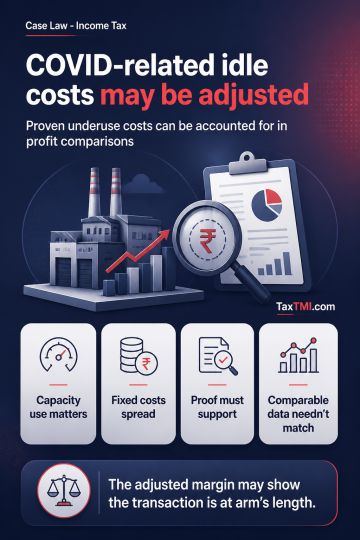
Capacity-utilisation adjustments under TNMM can neutralise substantiated COVID-related idle costs where underutilisation materially affects profitabil...
Page of 4830
Press 'Enter' after typing page number.
181 to 200 of 96587 Results
❮
❯
❯❯
0 / 200
Expand Note
Add to Folder
No Folders have been created
+
Are you sure you want to delete "My most important" ?
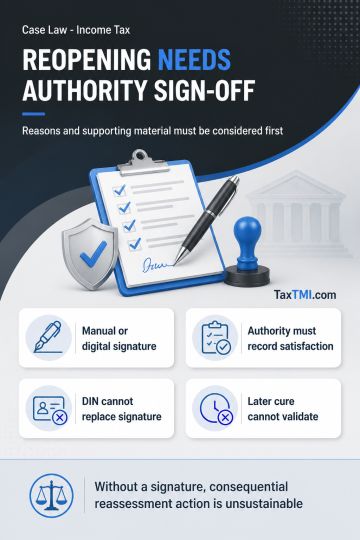
ITAT quashed reassessment proceedings under Section 148 after finding the PCIT's approval was granted mechanically without proper application of mind, contrary to established precedent requiring judicial examination of relevant material. The tribunal identified variance between the AO's recorded reasons and PCIT's approval, rendering the notice invalid per Supreme Court guidance in Teleperformance Global. Regarding substantive issues, ITAT deleted additions for alleged unaccounted production based on electricity consumption variations, holding no evidence existed of off-books purchases or sales, and rejected the CIT(A)'s averaging methodology. The tribunal also deleted bogus purchase additions following Prime Steel Industries precedent, allowing the assessee's appeal entirely while dismissing the department's cross-appeal on all grounds.
ITAT quashed reassessment proceedings under Section 148 after finding the PCIT's approval was granted mechanically without proper application of mind, contrary to established precedent requiring judicial examination of relevant material. The tribunal identified variance between the AO's recorded reasons and PCIT's approval, rendering the notice invalid per Supreme Court guidance in Teleperformance Global. Regarding substantive issues, ITAT deleted additions for alleged unaccounted production based on electricity consumption variations, holding no evidence existed of off-books purchases or sales, and rejected the CIT(A)'s averaging methodology. The tribunal also deleted bogus purchase additions following Prime Steel Industries precedent, allowing the assessee's appeal entirely while dismissing the department's cross-appeal on all grounds.
Note: It is a system-generated summary and is for quick reference only.
 TaxTMI
  TaxTMI
 of 4830




 Join Channel


