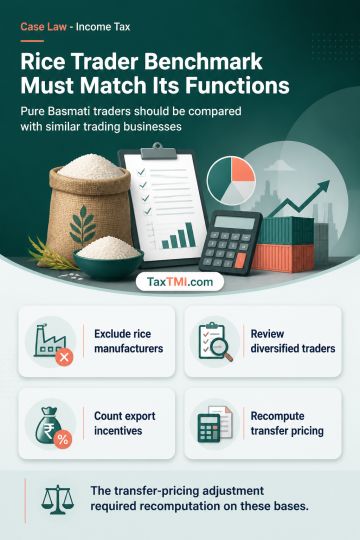
TNMM functional comparability requires excluding rice manufacturers from a pure Basmati rice trader's benchmark and recognising operating export recei...
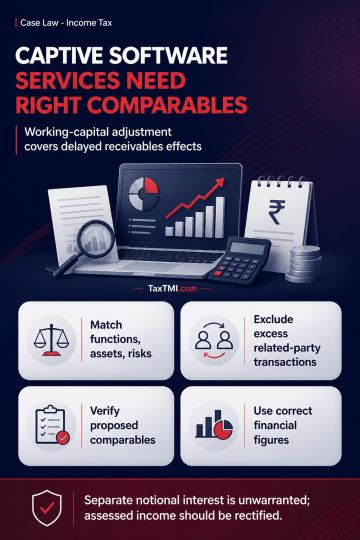
Working-capital adjustment subsumes delayed-receivable effects in TNMM benchmarking of captive software-development services, avoiding separate notion...
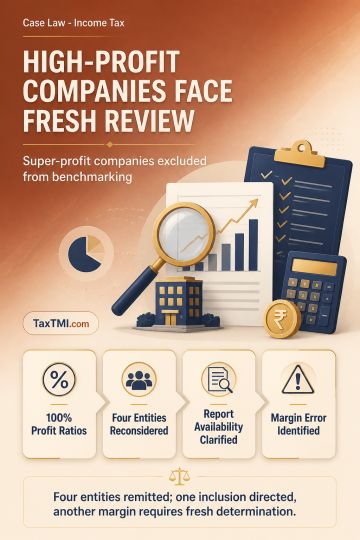
Transfer-pricing comparability requires exclusion of financially illogical super-profit comparables and correction of unsupported annual-report and ma...
Charitable character assessment preserves Section 80G approval despite inclusive spiritual teachings and incidental religious expenditure within the s...
Penalty proceedings for cash-loan acceptance require assessment proceedings and recorded Assessing Officer satisfaction; absent these, the proceedings...
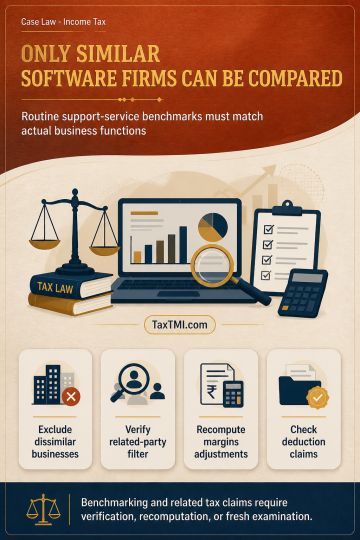
Functional comparability governs software-service benchmarking: dissimilar companies are excluded, while related-party filters, margins and working-ca...
The Central Government issued DGFT Notification No. 21/2025-26 under the Foreign Trade (Development & Regulation) Act, 1992, imposing port restrictions on nine categories of textile goods imported from Bangladesh. The notification prohibits import of specified flax, jute, and textile bast fiber products through any India-Bangladesh land border ports, restricting entry exclusively through Nhava Sheva Seaport. The restrictions apply to HS codes including flax tow and waste, jute fibers, single flax yarn, jute yarn, and woven fabrics. Transit goods destined for Nepal/Bhutan remain exempt, but re-export from these countries to India is prohibited. The measure took immediate effect from June 27, 2025, significantly limiting cross-border textile trade routes.
The Central Government issued DGFT Notification No. 21/2025-26 under the Foreign Trade (Development & Regulation) Act, 1992, imposing port restrictions on nine categories of textile goods imported from Bangladesh. The notification prohibits import of specified flax, jute, and textile bast fiber products through any India-Bangladesh land border ports, restricting entry exclusively through Nhava Sheva Seaport. The restrictions apply to HS codes including flax tow and waste, jute fibers, single flax yarn, jute yarn, and woven fabrics. Transit goods destined for Nepal/Bhutan remain exempt, but re-export from these countries to India is prohibited. The measure took immediate effect from June 27, 2025, significantly limiting cross-border textile trade routes.
Note: It is a system-generated summary and is for quick reference only.
 TaxTMI
  TaxTMI
 of 4830












 Join Channel


