Retention of seized property survives where recorded reasons support proceeds of crime, while stayed investigation periods are excluded from limitatio...
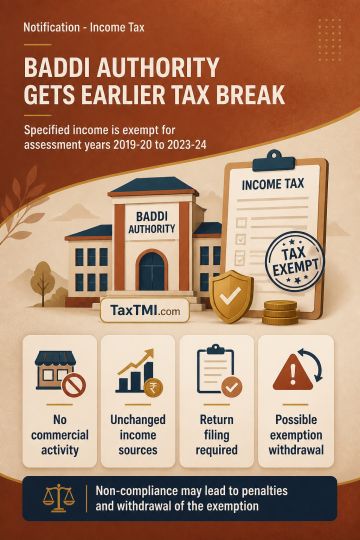
Specified income of Baddi Barotiwala Nalagarh Development Authority receives conditional tax exemption, retrospectively covering its designated assess...
Specified development authority income receives retrospective tax exemption, subject to non-commercial activity, unchanged income sources, and return-...
Unified Brand India framework introduces voluntary Trust Mark certification and funding support for export branding, packaging and global promotional ...
Origin Declaration authentication governs preferential tariff claims under India-UK CETA, requiring a validated reference number before import clearan...
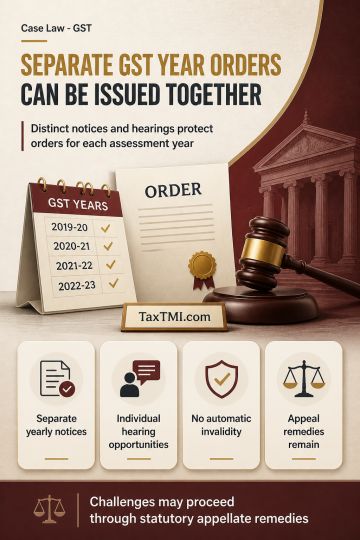
Separate assessment orders for different years remain valid when distinct notices and hearing opportunities prevent prejudice from combined proceeding...
The HC dismissed a writ petition challenging GST assessment orders under Section 73(9) CGST/BGST Act, 2017. The petitioner claimed clerical errors caused turnover suppression totaling Rs.4,41,27,934.50 across December 2018 and January 2019 returns, with mismatches between GSTR-3B and GSTR-1 filings. The assessing authority quantified liability for suppressed turnover, wrongful input tax credit utilization, and delayed tax payment. The appellate authority found insufficient evidence per clarificatory circular dated 27.02.2022 and Section 16(2). The HC held the assessment orders contained no natural justice violations or jurisdictional errors, noting available statutory remedy before the Tribunal. The Court declined to exercise extraordinary writ jurisdiction where adequate alternative remedies existed.
The HC dismissed a writ petition challenging GST assessment orders under Section 73(9) CGST/BGST Act, 2017. The petitioner claimed clerical errors caused turnover suppression totaling Rs.4,41,27,934.50 across December 2018 and January 2019 returns, with mismatches between GSTR-3B and GSTR-1 filings. The assessing authority quantified liability for suppressed turnover, wrongful input tax credit utilization, and delayed tax payment. The appellate authority found insufficient evidence per clarificatory circular dated 27.02.2022 and Section 16(2). The HC held the assessment orders contained no natural justice violations or jurisdictional errors, noting available statutory remedy before the Tribunal. The Court declined to exercise extraordinary writ jurisdiction where adequate alternative remedies existed.
Note: It is a system-generated summary and is for quick reference only.
 TaxTMI
 of 4805












 Join Channel


 TaxTMI
