Mutual fund maturity rules require proper rollover, redemption, disclosure, and due diligence; investor gains cannot excuse regulatory breaches or pen...
Threshold exemption excludes exempt services, while stamp-paper purchases avoid reverse charge; consequential service tax penalties were also set asid...
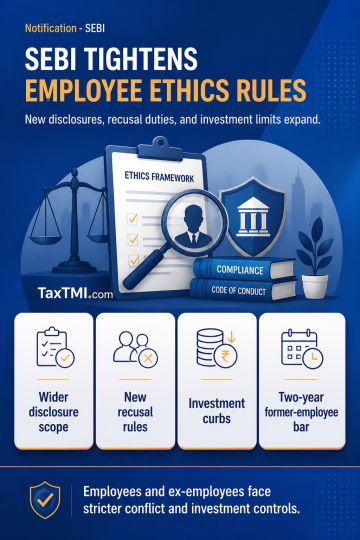
Employee conflict disclosures and investment restrictions expand with new recusal duties, post-employment limits, and compliance reporting requirement...
AAR held that third-party organization marketing exempted yoga courses cannot claim GST exemption on yoga course fees collected on behalf of yoga institutions. While Rule 33 CGST Rules 2017 permits exclusion of amounts collected by pure agents, applicant failed to provide documentary evidence establishing compliance with mandatory conditions including contractual arrangements authorizing expense incurrence, separate invoice indication, and strict cost pass-through without markup. Without demonstrating pure agent status within Rule 33 parameters, GST exemption on yoga course fee component was denied. Organization remains liable for GST on entire transaction value including collected fees despite underlying yoga courses being exempt.
AAR held that third-party organization marketing exempted yoga courses cannot claim GST exemption on yoga course fees collected on behalf of yoga institutions. While Rule 33 CGST Rules 2017 permits exclusion of amounts collected by pure agents, applicant failed to provide documentary evidence establishing compliance with mandatory conditions including contractual arrangements authorizing expense incurrence, separate invoice indication, and strict cost pass-through without markup. Without demonstrating pure agent status within Rule 33 parameters, GST exemption on yoga course fee component was denied. Organization remains liable for GST on entire transaction value including collected fees despite underlying yoga courses being exempt.
Note: It is a system-generated summary and is for quick reference only.
 TaxTMI
 of 4805













 Join Channel


 TaxTMI