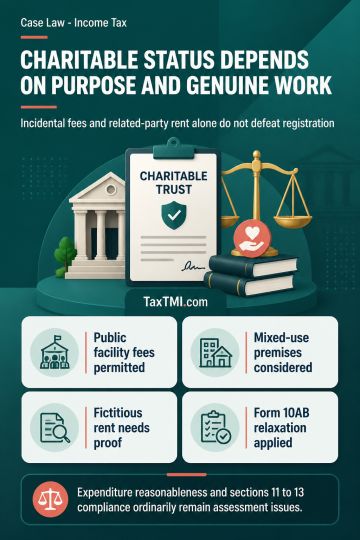
Charitable registration turns on predominant purpose and genuine activities, while incidental fees and related-party rent require supporting adverse m...
MAT book-profit adjustments exclude disallowances for exempt-income expenditure and demerger expenditure unless expressly listed under the statutory c...
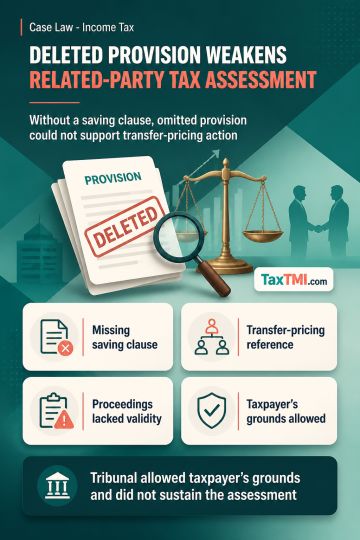
Omitted specified domestic transaction provision invalidates related-party expenditure transfer-pricing references and assessments based on consequent...
AAR held that third-party organization marketing exempted yoga courses cannot claim GST exemption on yoga course fees collected on behalf of yoga institutions. While Rule 33 CGST Rules 2017 permits exclusion of amounts collected by pure agents, applicant failed to provide documentary evidence establishing compliance with mandatory conditions including contractual arrangements authorizing expense incurrence, separate invoice indication, and strict cost pass-through without markup. Without demonstrating pure agent status within Rule 33 parameters, GST exemption on yoga course fee component was denied. Organization remains liable for GST on entire transaction value including collected fees despite underlying yoga courses being exempt.
AAR held that third-party organization marketing exempted yoga courses cannot claim GST exemption on yoga course fees collected on behalf of yoga institutions. While Rule 33 CGST Rules 2017 permits exclusion of amounts collected by pure agents, applicant failed to provide documentary evidence establishing compliance with mandatory conditions including contractual arrangements authorizing expense incurrence, separate invoice indication, and strict cost pass-through without markup. Without demonstrating pure agent status within Rule 33 parameters, GST exemption on yoga course fee component was denied. Organization remains liable for GST on entire transaction value including collected fees despite underlying yoga courses being exempt.
Note: It is a system-generated summary and is for quick reference only.
 TaxTMI
 of 4801







 Join Channel


 TaxTMI