Arrest safeguards require disclosed grounds, relative intimation and transit remand, while duplicate prosecution under the CGST framework is unsustain...
Document Identification Number defects can invalidate GST assessments, with delayed challenges entertained conditionally where patent irregularities e...
Windmill commissioning evidence supported higher depreciation where grid connection and electricity generation proved operational use before the relev...
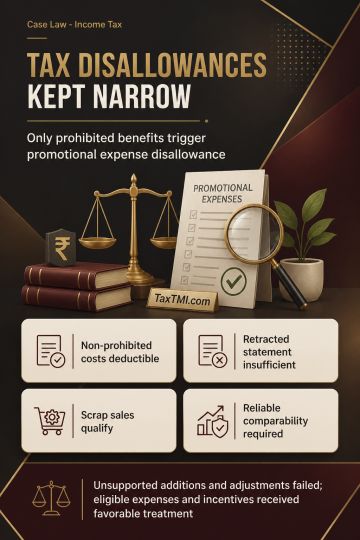
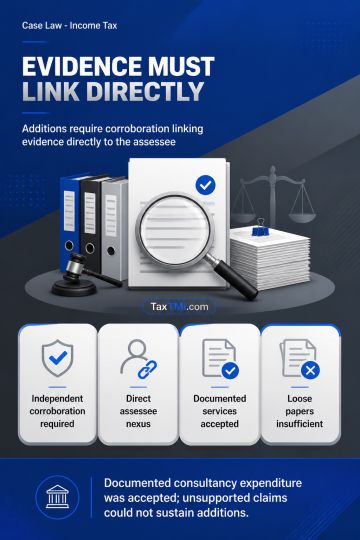
Pharmaceutical promotion and transfer-pricing comparability principles limited disallowances, while uncorroborated search allegations and unsupported ...
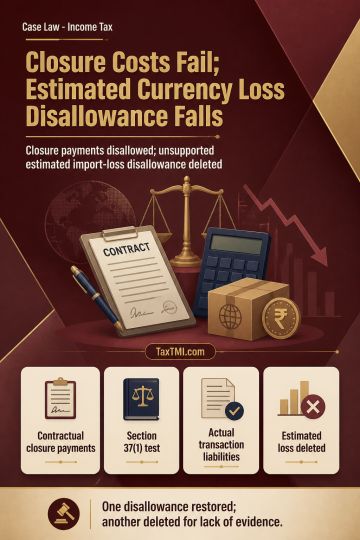
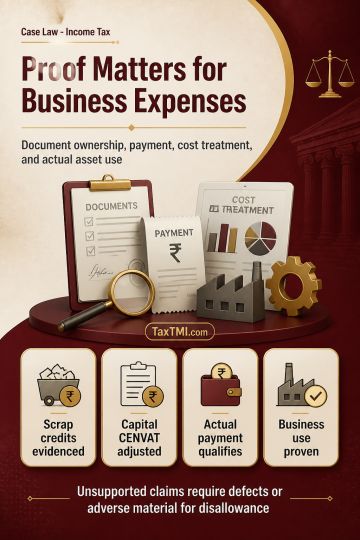
Business expenditure substantiation supports scrap credits, statutory payments and expense claims, while depreciation requires proof of actual busines...
The AAR ruled on GST exemption applicability for medical supplies under N/N. 1/2017-Central Tax (Rate). For inpatients, medicines and medical supplies naturally bundled with healthcare services qualify as composite supply, making the entire transaction GST-exempt under Entry 74 of Notification 12/2017. For outpatients receiving treatment within hospital premises (dialysis, chemotherapy, minor surgeries), supplies remain exempt when naturally bundled with healthcare services, as law creates no distinction between inpatients and outpatients. However, medicines prescribed for home consumption and follow-up care are taxable, as hospital involvement is limited to prescribing without continuous treatment supervision, failing to constitute composite supply. When GST is collected on exempt supplies, it must be remitted per Section 76 CGST Act 2017.
The AAR ruled on GST exemption applicability for medical supplies under N/N. 1/2017-Central Tax (Rate). For inpatients, medicines and medical supplies naturally bundled with healthcare services qualify as composite supply, making the entire transaction GST-exempt under Entry 74 of Notification 12/2017. For outpatients receiving treatment within hospital premises (dialysis, chemotherapy, minor surgeries), supplies remain exempt when naturally bundled with healthcare services, as law creates no distinction between inpatients and outpatients. However, medicines prescribed for home consumption and follow-up care are taxable, as hospital involvement is limited to prescribing without continuous treatment supervision, failing to constitute composite supply. When GST is collected on exempt supplies, it must be remitted per Section 76 CGST Act 2017.
Note: It is a system-generated summary and is for quick reference only.
 TaxTMI
 of 4805








 Join Channel


 TaxTMI