Retention of seized property survives where recorded reasons support proceeds of crime, while stayed investigation periods are excluded from limitatio...
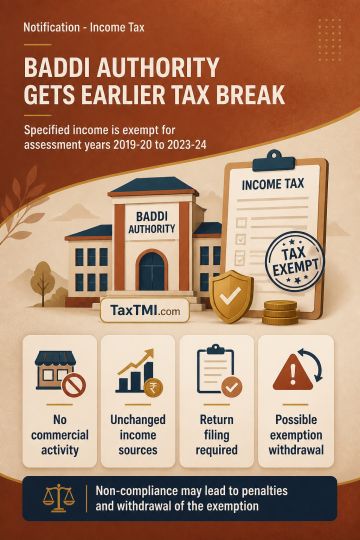
Specified income of Baddi Barotiwala Nalagarh Development Authority receives conditional tax exemption, retrospectively covering its designated assess...
Specified development authority income receives retrospective tax exemption, subject to non-commercial activity, unchanged income sources, and return-...
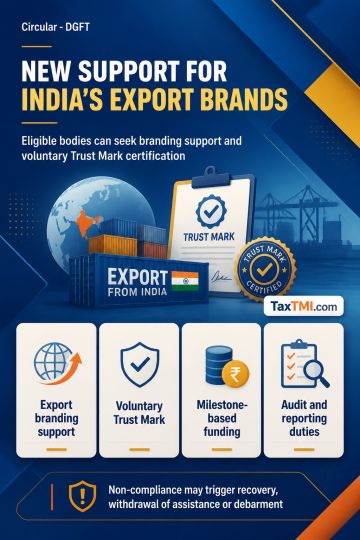
Unified Brand India framework introduces voluntary Trust Mark certification and funding support for export branding, packaging and global promotional ...
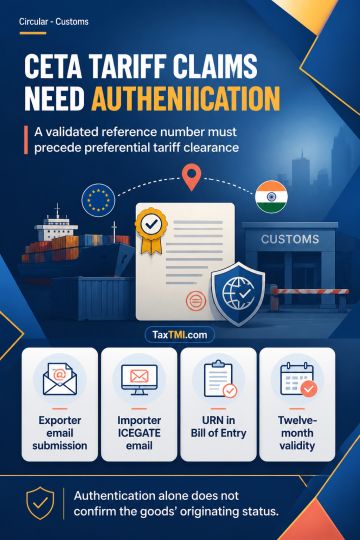
Origin Declaration authentication governs preferential tariff claims under India-UK CETA, requiring a validated reference number before import clearan...
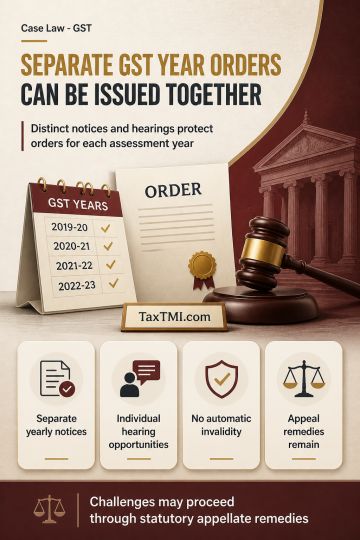
Separate assessment orders for different years remain valid when distinct notices and hearing opportunities prevent prejudice from combined proceeding...
AAR ruled that potable drinking water supplied through tanker lorries to government institutions and private customers qualifies for GST exemption under Serial No. 99 of Notification 02/2017-Central Tax (Rate). The applicant collected water from wells, conducted purification through filtration and chlorination to meet drinking water standards, and supplied in bulk quantities via tankers with 2,000-30,000 kiloliter capacity. The Authority determined that basic purification methods like chlorination and filtration used by public utilities do not disqualify the water from exemption, and since water was not supplied in sealed containers but transported in bulk through tankers, it falls within the exempted category under the GST framework.
AAR ruled that potable drinking water supplied through tanker lorries to government institutions and private customers qualifies for GST exemption under Serial No. 99 of Notification 02/2017-Central Tax (Rate). The applicant collected water from wells, conducted purification through filtration and chlorination to meet drinking water standards, and supplied in bulk quantities via tankers with 2,000-30,000 kiloliter capacity. The Authority determined that basic purification methods like chlorination and filtration used by public utilities do not disqualify the water from exemption, and since water was not supplied in sealed containers but transported in bulk through tankers, it falls within the exempted category under the GST framework.
Note: It is a system-generated summary and is for quick reference only.
 TaxTMI
 of 4805







 Join Channel


 TaxTMI
